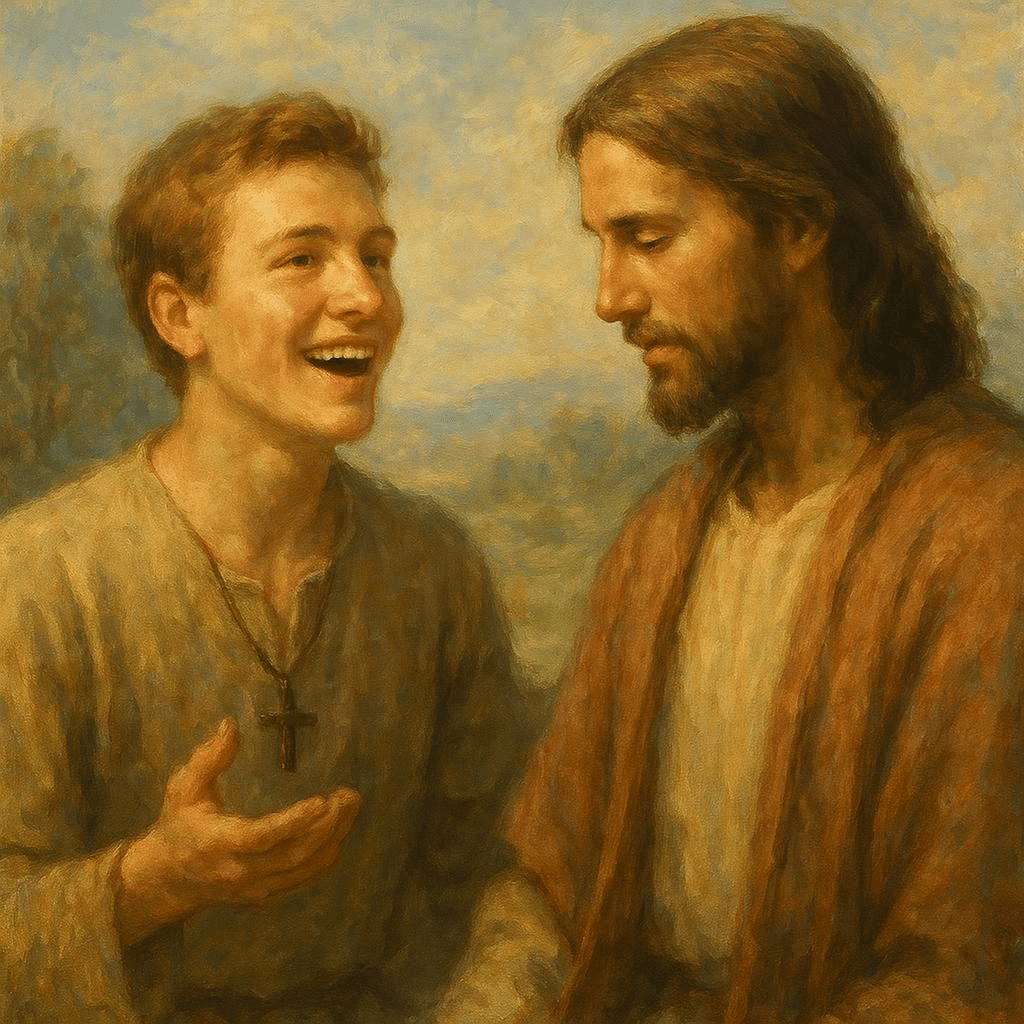
In the biblical religion of Israel (the era of the Second Temple), the central and obligatory element according to the Torah was sacrifice: daily sacrifices, sacrifices on holidays, sacrifices for sin, purification, and so on. After the destruction of the Second Temple by the Romans in the seventieth year of our era, sacrifices ceased, and the question arose: how to keep the Covenant and maintain a relationship with God? The rabbis, although it may sound paradoxical, in a sense followed the spirit of Jesus’ teaching. There are prerequisites in the Tanakh: the prophets said that God desires “mercy, not sacrifice”, “a sacrifice to God is a broken spirit.” Jesus pointed to the same thing. Representatives of Rabbinic Judaism declared that daily prayers, observance of the commandments, and acts of mercy are a substitute for the daily temple sacrifices. Synagogues became a substitute for the temple after its destruction. Thus, in the blink of an eye, because of the destruction of the temple, the supposedly inviolable requirement of God in the Torah regarding animal sacrifices was replaced by the rabbis and scribes with something else. Few people notice this change of direction in Judaism.
The era of Jesus Christ was indeed a significant milestone in the history of civilization: humanity moved from the idea of animal sacrifice to more elevated religious ideas. Christianity, however, still insists on one, the most important sacrifice to God in the person of Jesus Christ. Jesus’ apostles developed and strengthened this idea, hoping that their compatriots would accept the idea of Jesus’ sacrifice. However, this did not happen for various reasons. And so now Christianity is the bearer of a very ancient idea of the need for sacrifice to God, the idea of redemption, even if only in the person of Jesus Christ, while other world religions have long abandoned the idea of sacrifice. Isn’t it time for Christianity to move on to new tracks so as not to remain locked in the past and to step forward as civilization develops?
Jesus did not develop the idea of sacrifice to God in any form. Children do not have to sacrifice to their father for the sake of propitiation. However, the cross did become an integral part of Jesus’ spiritual teaching. However, not as a symbol of sacrifice: the cross is a symbol of the personality of Jesus, which can serve as a beacon for spiritually seeking people at all times. What does the cross mean? In the life and teaching of Jesus, the cross is a sign of absolute determination. In the name of the main idea that drives a person, one can and must go to the very end, even if it is inevitable death. “Truth or death”: this is the motto of Jesus. Salvation in the teaching of Jesus is spiritual birth, growth, harmony, the unity of man with the personality of Jesus, and, of course, with the personality and Spirit of the Heavenly Father. The cross is a key component for unraveling the character and personality of Jesus, and therefore for unity with Him.
There are examples in the history of civilization of people sacrificing their lives for the sake of truth, like Jesus. Socrates, when he was asked to renounce philosophy, took the cup of poison. His extraordinary mind clearly saw the truth in his philosophical quest, and it was above the whole world. Following the truth was more precious to him than physical existence. John the Baptist, with his desert charisma and loyalty to his conscience, condemned the morals of Herod, for which he lost his head. Giordano Bruno, with his cosmic discoveries, could not renounce his scientific truths even in the face of an all-powerful religion. Martin Luther King, who had a dream of equality and brotherhood, knew that he was going to certain death. And yet he did not turn from his path. And all these great deeds have a prototype, an original: God himself acts exactly like this. The cross is a symbol of the personality of Jesus and of every person who chooses the truth even in the face of death.
The central dogma of Western Christianity (especially Protestantism) is “Jesus died for sins.” If the cross is no longer understood as a “sacrifice to God,” then the legal scheme “God demands payment – Christ paid” will disappear. Instead, an ethical-existential understanding will emerge: the cross is a symbol of fidelity to the truth, even at the cost of life. The emphasis on the personality of Jesus will inevitably shift: Christianity will become more “personalistic” and psychologically oriented. At its center will not be the dogma of sacrifice, but the example of Jesus as a man united with God and His authentic teaching.
What are the other ethical and spiritual consequences of such an understanding of the cross of Christ? A call to imitation: the cross will be perceived not as something that is “done for us,” but as something that “is yet to be done.” There will be a strengthening of freedom and responsibility of the individual: a person must choose the truth himself, and not rely on “automatic redemption.” There will be a rapprochement with the philosophy of Socrates, Gandhi, Martin Luther King: a willingness to die for truth, justice, love. Such a shift will make Christianity more attractive to modern people who are alien to the archaic logic of “God demands blood.” Christianity will be perceived as an ethical challenge, spiritual growth and a school of courage, and not as a “ritual means of salvation.” Christianity, like a huge, massive and blazing star, will converge with Buddhism, Islam, various religions and philosophies, and will definitely transform or even subjugate them.
The social consequences of such a path are also not difficult to foresee. There will be a break with traditional dogmatic Christianity. Catholicism, Orthodoxy and most Protestant movements will hardly be able to quickly abandon the “sacrifice”. But there are already movements that gravitate toward such an interpretation. Traditional churches will actively resist, they will perceive the new understanding of the cross of Jesus as heresy. However, parallel communities will appear, as was the case with the Protestants in their time. The new Christianity will proclaim the cross as a symbol of the personality of Jesus, a symbol of fidelity to truth and love. There will be much less dogma, more personal example. The center of gravity will shift from the mystery of redemption to the practice of living in the spirit of Jesus. Christianity will be transformed: from the religion of redemption – to the religion of personal truth and courage, from the cult of sacrifice – to the cult of the personality of Jesus and imitation of him. This will lead to great upheavals in Christianity over the next few centuries, but these changes will be a great blessing for civilization on the scale of the coming millennia.











 Follow Jesus Christ
Leave a comment