
Paul’s teaching on the “sinful death of humanity in Adam” is that every individual has lost direction, lost connection with God, and become corrupted. Yet each person still retains certain capacities that allow them, to greater or lesser degrees, to perceive the Divine light. In Catholic tradition (Augustine, Thomas Aquinas) and in Orthodoxy, fallen humanity is not entirely deprived of the ability to perceive truth and goodness: the “image of God” remains, though the “likeness” is damaged. In the Reformation (Luther, Calvin) the emphasis is sharper—on “total depravity.” That is, without grace, human beings are incapable of drawing near to God. Any residual “capacity for good” does not lead to salvation.
In Judaism, the human problem is understood differently. There is yetzer ha-tov (the inclination toward good) and yetzer ha-ra (the inclination toward evil), and a person is constantly choosing between them. Good and evil are part of free will. In Buddhism there is no notion of “original sin,” but suffering arises from an obscured mind. Evil is the result of the three poisons: ignorance, greed, and hatred. In Confucianism, evil is seen as the result of poor upbringing and social conditions. Science approaches human evil more neutrally: biologically, aggression is an inheritance of survival instincts and genetic drives; psychologically, people may become destructive because of trauma, social influences, or mental disorders.
Whatever explanations are offered, they all circle around the same central tragedy of our existence. The filmmaker Kira Muratova once wrote: “Human life is frightening. It contains much that is good, and it can take many forms, but it is frightening. You do not know yourself in advance, you do not know you are mistaken, you do not know the price of your actions. Only afterward do you begin to grasp your past guilt. You ask: why didn’t I think of that at the time? But you could not have thought of it. You didn’t have the mind or the feelings for it. A puppy cannot understand what an adult animal understands.”
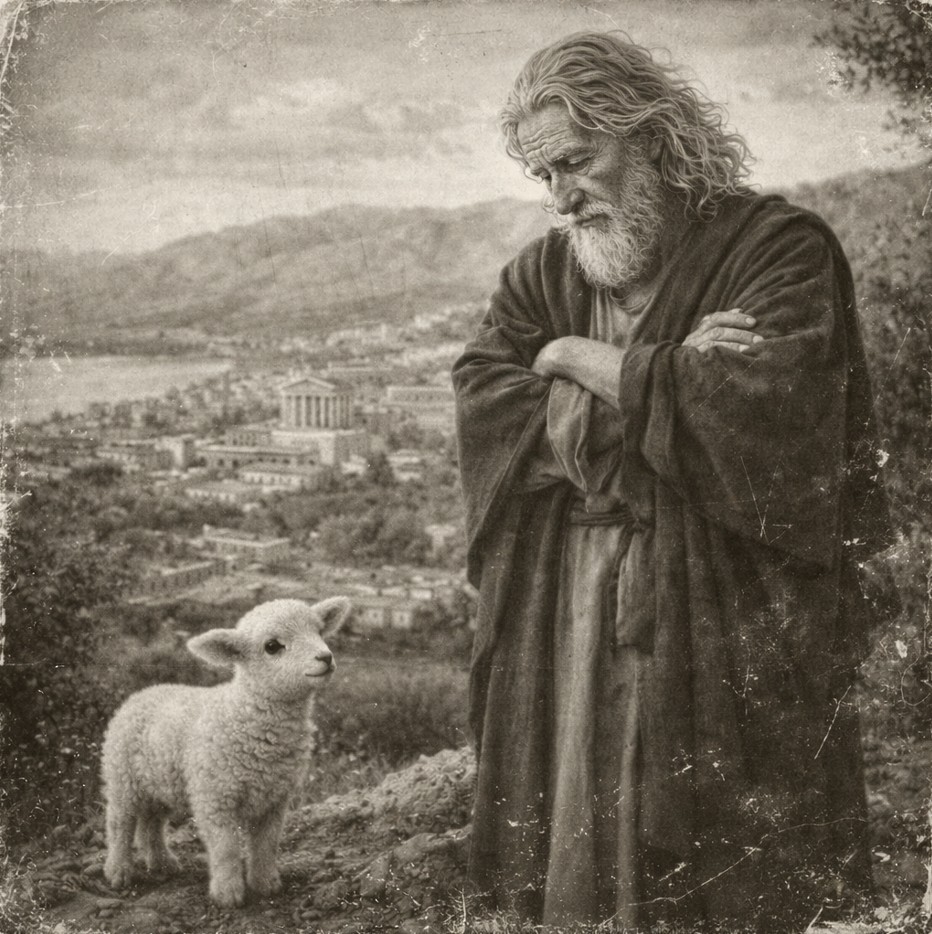
The teaching of Jesus does not spell out every detail of why people become evil or what the causes are. But he points to the human heart as the source of both good and evil. He taught that there are people who rebel against God, people who are righteous, and many who are blinded and lost—like children or wandering sheep. His message does not emphasize the cause or the “punishment,” but rather the possibility of repentance and awakening. Jesus called himself a physician. He spoke of God’s mercy. No one, least of all God, punishes blindness. Once Jesus even said that he had not come to punish people for their deliberate sins or their refusal of God. Evil people punish themselves. So should we endlessly analyze the roots of our sins? No—we must simply look forward.
The gospel of Jesus Christ is not about being rescued from punishment; it is about the outstretched hand of God. Humanity as a species is hardly guilty in itself. Each of us, whether willingly or not, sins—and bears responsibility only as an individual, only for our own actions. There is no special “wrath” of God directed at all humanity. There is the love of God directed toward humanity. According to Jesus, the true judge is the light. It compels us either to move toward God or to remain in darkness. If a person believes and chooses the path of God, Jesus warmly invites them onto the way of life, to learn righteousness and joy. Those who go into the darkness depart from eternal life of their own accord, not by compulsion.
And in the end, it does not matter so much what exactly happened at the dawn of human history with Adam and Eve. We do not know whether humanity is fully corrupt or not. In essence, it doesn’t matter. What matters is the perspective of following the divine light. It is open to every person, in every condition. These doors have been, are, and always will be open.














 Follow Jesus Christ
Leave a comment