In his letter to the Galatians, the Apostle Paul uses an argument that, at least theoretically, any Jew could dispute. Yes, Paul was a master of rhetoric — but in our world, everything can be challenged, and every line of reasoning has its cracks. Paul wrote:
“O foolish Galatians! Who has bewitched you? Before your very eyes Jesus Christ was clearly portrayed as crucified. I would like to learn just one thing from you: Did you receive the Spirit by the works of the law, or by believing what you heard? Are you so foolish? After beginning by means of the Spirit, are you now trying to finish by means of the flesh?”
A Jewish follower might well respond: “The Torah too is a proclamation of faith, not just a mechanical set of rules. Through it, believers also receive the Spirit.”
This objection assumes that Paul opposed “Law” and “faith,” while in Judaism these ideas are inseparable. For a Jew, emunah (faith) and mitzvot (obedience to the Law) are two sides of the same coin. From their perspective, Paul creates a false dichotomy — as if the Law were just a ritual, and faith something entirely different. That’s why Judaism, over the centuries, kept expanding the Torah — through the Mishnah, the Kabbalah, and other writings — experimenting with forms of worship that made it a full-fledged rival to Christianity. Yet to truly catch up with Christianity, the rabbis would have had to break away from their roots — something they could never do. The stories of Creation, of Abraham, of the Exodus and the Law are like a chain around the ankle — they anchor Judaism to the earth and keep it from soaring into the sky.
Still, Paul was right in seeing that the Judaism of his day had become primitive — a system of rules and prohibitions — and that Christianity was a revolutionary leap forward, freeing the human soul from the shackles of religious formalism. And if anyone knew his native religion inside out, it was Paul. For him, turning from Christianity back to Judaism was a step backward — a regression. If we look closely, we see a grand picture of religious evolution — a gradual ascent from simpler to more complex forms of faith.
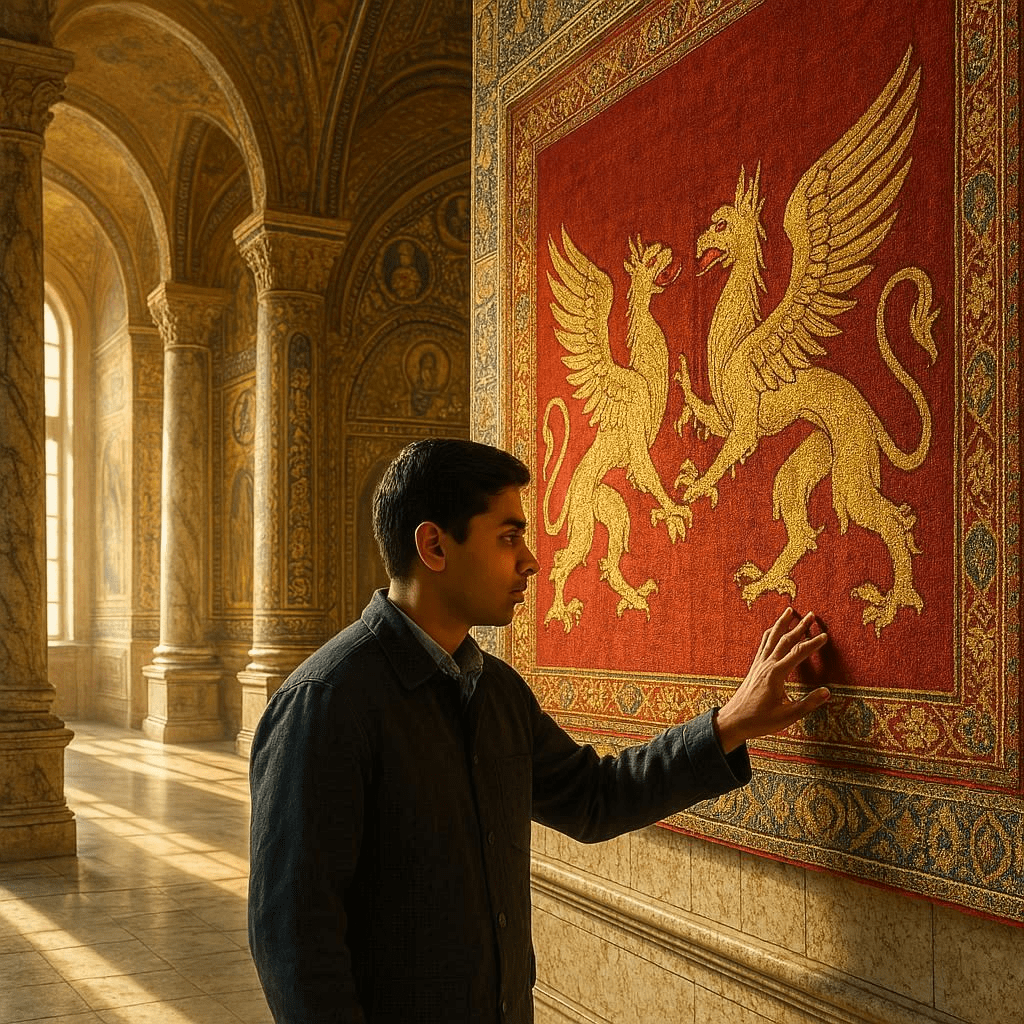
Many people assume that Judaism appeared out of nowhere, created from scratch. But that’s not true. In many ways, Judaism is the heir of the Egyptian religion. It absorbed Egypt’s higher religious concepts, reworked and refined them. On the scale of history, Judaism was more advanced than Egyptian belief — just as Christianity later became more advanced than Judaism. For a brief moment, Egypt worshiped one God, though in the form of the solar disk. It was a kind of monotheism — or perhaps monolatry, the worship of one god while recognizing others. The Jewish Tabernacle — with its veil, ark, and altar — shares striking structural similarities with Egyptian sanctuaries. Priestly garments mirrored Egyptian ritual dress. The Ark of the Covenant resembles Egyptian sacred chests with winged figures. The idea of the divine name — that knowing it grants power — was deeply rooted in Egypt and found its way into the Old Testament. Even the story of Moses in the basket floating on the Nile mirrors tales of Egyptian kings’ births. Judaism borrowed not only from Egypt but also from Iranian and Mesopotamian sources. It took many of these ideas, purified them of polytheism and magic, and, through the genius of Moses, forged a new theology — one in which God was not part of nature but its source. Egypt, in a sense, became the incubator where Israel both defined itself as different and yet was shaped by what it rejected.
And the same pattern repeated itself with Christianity.
Most people are quite comfortable with the idea that Christianity was born from the womb of Judaism. But that doesn’t mean Judaism was “superior.” No more than Egyptian faith was superior to Hebrew faith. It simply shows that we’re dealing with the evolution of religious consciousness — a continuous refinement of spiritual ideas. And just as it’s impossible to say where this process began, it’s equally impossible to say where it will end. What came before Egyptian religion? A proto-Egyptian faith? And before that? Perhaps the beliefs of a people long forgotten, whose gods and stories have vanished into the sands of time. The line fades into the infinite past, generation after generation. But religious evolution doesn’t stop in the past — it stretches into the future as well.
Many people naively believe that the end of the world is near, and that now, finally, they possess the highest religion humanity will ever know. Yet history keeps proving otherwise: nothing ever ends — it only transforms and begins anew. By the same logic, out of the depths of Christianity a new, more perfect religion will one day be born — just as Christianity once emerged from Judaism. Every religion goes through youth, maturity, and old age. And someday, many millennia from now, that new faith too will grow old, and something even greater — a “super-religion,” if you will — will take its place. Perhaps this process will continue endlessly, until religion itself becomes something angelic — a direct communion with the divine.
The faith that comes after Christianity will likely center not on dogma, but on the person of Jesus — on His character, His spirit, His way of being. It will be more psychological, more refined, free of the flaws of mass religion. We don’t know where we stand on humanity’s timeline. But in the coming of the Son of God — in that pivotal, luminous moment of history — we were given the Absolute, the true image of God. And if there is only one God, then there can be only one divine personality. If Jesus is the Son of God, then studying His personality is the surest way to know God Himself. The human self stands unimaginably far from divine perfection — yet the goal remains the same: to reach upward, toward the infinite personality of the Creator of all things.
There is no other road to eternity — only the road that passes through the understanding of Christ.













 Follow Jesus Christ
Leave a comment