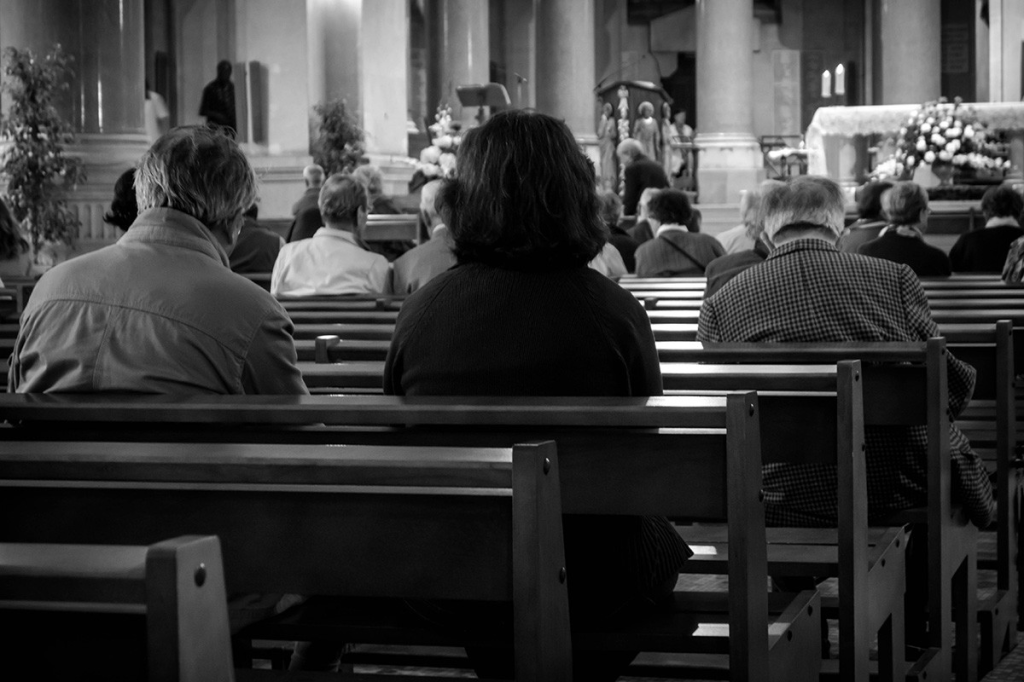
More and more people are stopping attending church. They aren’t leaving because they don’t care; they’re leaving because they care too much to keep living in forms that no longer give life. That doesn’t mean the church is “bad” or irretrievably obsolete. Some churches still sometimes convey the atmosphere of the band of apostles and disciples Jesus created. It means an anthropological shift has occurred, and forms don’t always keep up with it. People are not leaving God or Jesus; they are leaving a form that no longer answers their inner experience. Let’s look at the main reasons for this — stated without caricature or blame, because we are dealing with real, widespread processes.
A gap between lived experience and church language. The modern person lives in a world of psychological vulnerability, overload, anxiety, and identity crises. Yet church language often continues to speak in categories of duty, ready-made answers, and abstract formulas. This creates the feeling that people’s real questions have no addressee. People don’t feel heard. Christian services don’t even presuppose voicing one’s own questions or thoughts: instead of dialogue there is a monologue from the church leader.
Weariness with moralizing that doesn’t heal. Many churches can say well what is wrong but do a poor job of answering why a person is hurting. Modern people are traumatized by family mistakes, work, the past, and social anxiety. When they are offered only norms and demands again, they feel pressure, not help.
A crisis of trust in church authority. Scandals, politicization, the alliance of religion with ideology and fear have undermined trust. The church is increasingly perceived as a system of control, a bearer of power, a keeper of the “right position,” rather than as a space of healing and truth.
Apparently, for centuries the dominant question was “Who is right?” Today, in the twenty-first century, it sounds different: “How can I live without falling apart?” By inertia the church often continues to answer the first question, while people desperately seek an answer to the second. People no longer want to adjudicate who is right and who is wrong; they want inner peace and answers to personal questions.
Society is gradually evolving from group consciousness toward individual consciousness. The spiritual path is increasingly understood as an individual journey. People are less willing to delegate their faith to an institution. They want to understand, experience, and test things for themselves. This isn’t necessarily rebellion against the church. More often it comes from deep reflection and responsibility for one’s inner life.
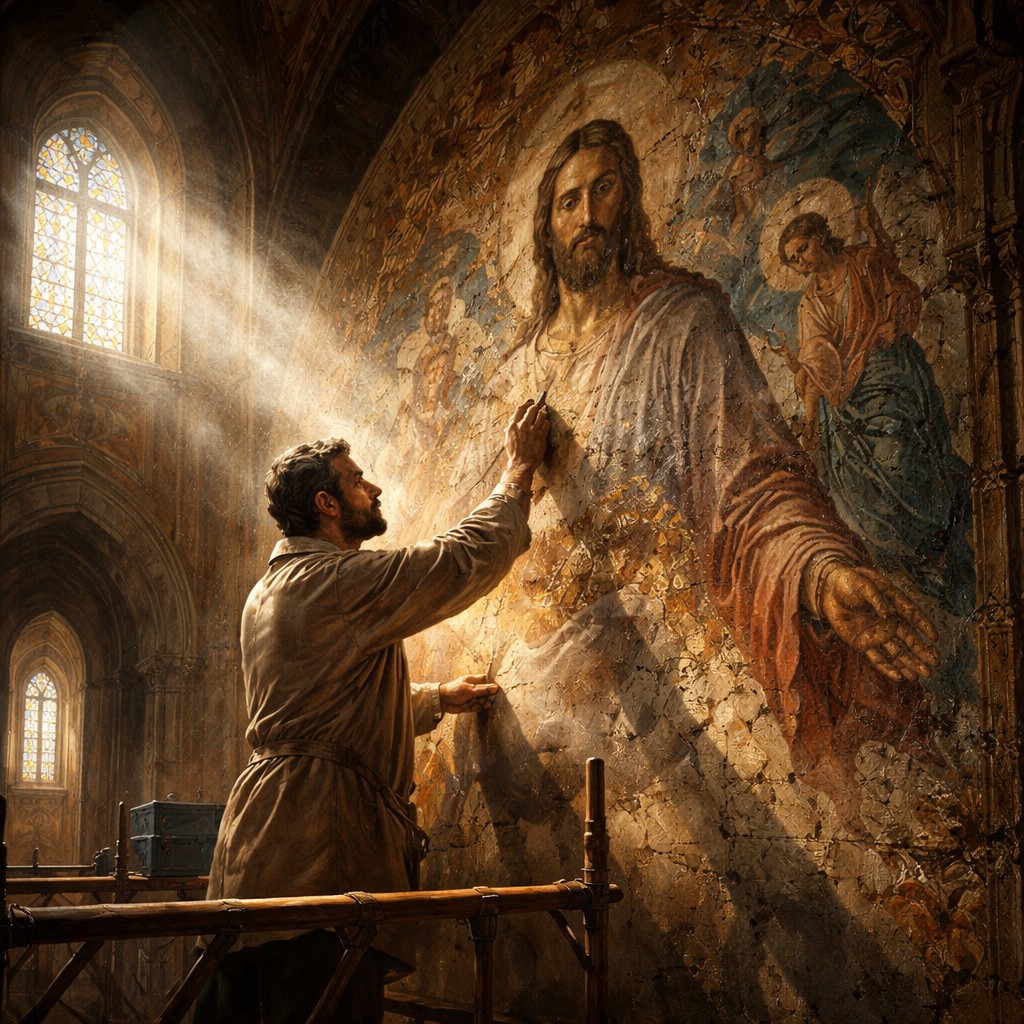
Add to that the fact that the image of Jesus has become obscured and blurred. For many, Jesus has been masked by church culture; his words are replaced by doctrine, his image mixed with the institution. People aren’t leaving Jesus so much as stepping away to try to hear him again. The depth of various church doctrines is often insufficient, or the dogmas are simply blurred; people are disappointed and want a more intense return on their investment. Research, for example data from the Pew Research Center, shows a steady rise in the “spiritual but not religious” group. This is not the disappearance of spiritual searching but a change of form.
What kind of group or community did Jesus himself form? Jesus was an extra-systemic figure. He didn’t create a religious system. He didn’t compete with systems — he removed the very need for competition. Modern groups often try to hold people by giving them “value” and offering benefits. Jesus did the opposite. He didn’t fight for loyalty. He said things that reduced dependency: “If anyone wants to follow me, let him decide for himself,” “You may leave if you wish.” Paradoxically, this increased trust; it made belonging voluntary and removed hidden manipulation. People stayed not from fear of losing out but from an inner response. Belonging to a community was not an absolute requirement for salvation.
Jesus offered not a “group identity” but the restoration of the person. Modern communities often operate like this: “you are valuable because you are with us,” or “if you leave you will lose your salvation.” Jesus worked differently: “you are valuable, and therefore you may be here.” He knew each disciple by name, paused, asked questions, and spoke with the marginalized. People experienced recognition before change, not after. That provided deep satisfaction because it didn’t require a mask, didn’t require proving oneself, and didn’t depend on a role. Joining a modern megachurch is like approaching a colossus where the believer is a tiny cog. Joining Jesus’ group was joining a community of equals where your personhood mattered.
Jesus created an intense sense of meaning rather than comfort and stability. His group was not comfortable. There were no guarantees of safety or schedules of ceremonial events. But there was authenticity, the sense that something real was happening, and a clear direction for life. There were missionary journeys, shared problem-solving, close fellowship around a fire. Modern people often seek stability and comfort; people in Jesus’ time sought meaning more than comfort. Jesus gave a meaning that transcended the self. That is more powerful than any retention program. Jesus did not solve the problem of gratification. He removed the cause of inner emptiness. He did not gather people around a brand; he taught and returned them to themselves, and that was enough.
The group Jesus created had other important features. The absence of formal roles and hierarchies — a society without a career ladder: “It shall not be so among you,” “You have one Teacher, and you are all brothers.” No one grew at the expense of another. No one became “more important” by virtue of status. The group rested on relationships, not on power. Direct access to the source of meaning, without intermediaries or admission systems: “The kingdom of God is within you,” “I am the way,” not “I am an institution.” Jesus’ followers didn’t need to earn it, pass stages, sacraments, or conform to external forms. It was a matter of understanding the truth, and the meaning was available here and now. Small community instead of mass: Jesus did not aim for quantity. A tight circle of close disciples, a wider circle of less-invested followers, individual conversations (Nicodemus, Mary, Peter). Jesus taught that “where two or three are gathered…” Presence was proclaimed more important than scale. Depth mattered more than reach.
Is it possible today to recreate Jesus’ group? Probably not. Most likely no. Modern society created church culture in an attempt to preserve spiritual values, so today’s church is more theatrical scenery than a burning core of truth. Today we can reform the church bit by bit, moving it closer to Jesus’ ideal. Perhaps we should allow him to be heard within church walls, focus on his teaching rather than on other biblical doctrines, not demand what Jesus did not demand. Do not insist on masks. Allow freedom of opinion while still requiring worship of Jesus. Do not press dogmas and let people go in peace if they want to leave. Salvation is a personal experience. Seek out people with the most vivid experience of spiritual growth and make them guides for others. Unfortunately, structure often replaces spirit. What is needed is a reformation of the church that preserves order while inspiring. The future of faith, the future of the Church of Christ, is not in institutions but in mature, inwardly free people.













 Follow Jesus Christ
Leave a comment