Jericho in the time of Christ was an oasis fragrant with dates, roses, and road dust. A wealthy trade hub on the caravan routes, it bustled with noisy bazaars and guards at its gates. The weather was hot; above stretched an almost cloudless blue spring sky, and the blinding light bounced off pale stone walls. Narrow streets were filled with the mingled scents of fried fish and exotic incense. And today, to the daily cries of market sellers was added the roar and clamor of a crowd surrounding Jesus and His disciples.
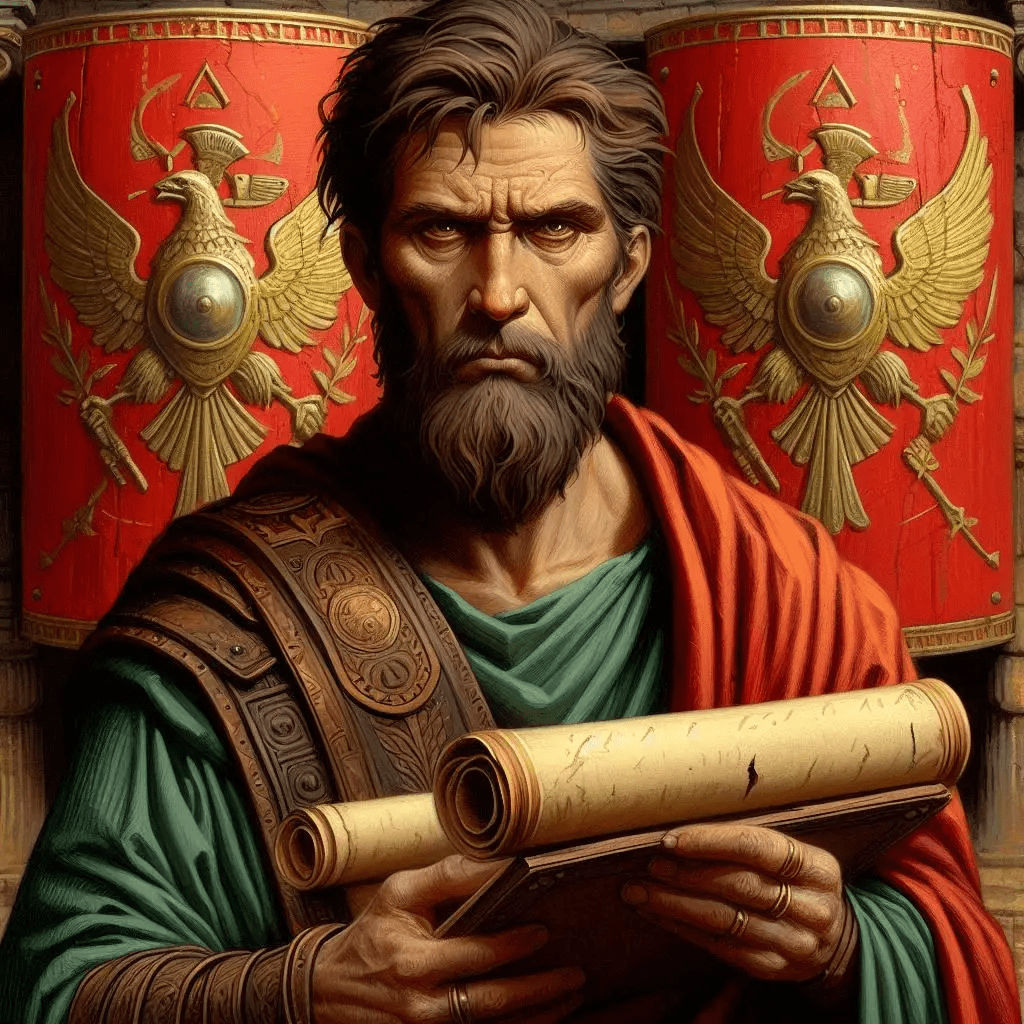
By the third year of His ministry, Jesus was so well known that in any town it was almost impossible to get near Him. The crowds were thick, eager to see the remarkable man and teacher. It was just such a crowd that the short-statured Zacchaeus could not push through. He was a tax collector for the Roman Empire—meaning, in the eyes of most Jews, a sinner, a collaborator, and a traitor. Imagine, for example, a native Ukrainian serving in the occupying Russian forces—that’s about how his neighbors saw him.
The phrase “tax collector” comes from the Latin taxare—to assess, to impose a tax, even to criticize. Taxare also carried the sense “to shake” or “to rattle,” which, let’s be honest, captures exactly how taxpayers often feel. In English, “tax” settled into its financial meaning in the Middle Ages, but kept its figurative sense of “burden” or “strain” as in “to tax someone’s patience.” In seventeenth- to nineteenth-century English culture, the tax collector was one of the most disliked public figures, rivaling the court bailiff. In colonial America, the hatred ran so deep that in Boston, in seventeen sixty-five, a mob pelted the home of tax collector Andrew Oliver with stones and hung his effigy from a tree. That became a symbol of protest against the hated Stamp Acts—and a spark on the road to the American Revolution.
Zacchaeus was no ordinary collector; he was the chief tax collector. He dressed better than most—his tunic was of fine fabric, his belt clasped with silver plates, his sandals light and well-made. Though short, he walked quickly, eyes sharp, hands accustomed to counting coins. His reputation? “Smart, shrewd… but sold out to Rome.” Realizing he couldn’t see over the crowd, and unwilling to give up, this wealthy official did something almost childish: he climbed a tree to look down on Jesus from above. Suddenly, Jesus stopped, looked up, and called, “Zacchaeus! Come down at once. I must stay at your house tonight.” For Zacchaeus, this was a shock—and a profound honor, to host a man widely believed to be “of God.”
The whole procession moved toward Zacchaeus’s house. In the crowd, mutters rose: “Well, would you look at that—He’s going to the house of a sinner!” During the meal that followed, the Pharisees publicly criticized Jesus for keeping company with the corrupt and the unfaithful. Zacchaeus stood and declared before everyone that he repented of his wrongs, promising to give half his wealth to the poor and to repay anyone he had overcharged four times over. Jesus replied, also in front of all: “Zacchaeus is a son of Abraham, and salvation has come to his house today.” What happened next to Zacchaeus—how his neighbors treated him afterward—we can only guess.
In the first century, tax collectors in Judea and Galilee were usually Jews or other locals hired by the Roman authorities—or by the Herodian administration—to collect taxes, customs duties, and road tolls. They worked under a tax farming system: they paid the government a fixed sum for the right to collect taxes in a given area, then kept anything they could gather above that amount. Naturally, this led to abuse, and made them hated as extortionists. Yet under Roman law, Zacchaeus had broken no official rules by collecting extra and pocketing the difference.
To the crowd listening, Jesus explained that He had come for the sick, the sinful, and the lost. It was precisely such troubled souls who were drawn to Him—unlike those satisfied with their own lives. Morally, He was right: to abandon the guilty who sincerely wished to change was wrong. Bringing them back to the right path was a good and necessary work. And in such moments, the Pharisees would often fall silent and slip away. For religious formalists, the only tools for dealing with wayward people were harsh criticism and open contempt. Jesus was different. He could bring sinners back to God—and heal human blindness.














 Follow Jesus Christ
Leave a comment