
People do not like to talk about death — their own or the death of those close to them. The subject of death has always been shrouded in misunderstanding and fear. In Paul’s teaching, physical death is a punishment for humanity, tied to sin. In Jesus’ teaching, death is not a punishment but rather a phenomenon of nature. Jesus did not speak of the causes of death nor try to blame anything or anyone for its occurrence. In Jesus’ view, physical death is natural, and there is no such thing as spiritual death. Death, in his teaching, is more a transformation, a passage from the material to the spiritual.
Still, the fear of death is deeply rooted in human consciousness. From childhood we see everything around us change, age, and disappear, and we try to hold on to permanence. But it is precisely the desire to preserve the temporary that makes us prisoners of an illusion. Fear of death is the fear of losing control, of surrendering oneself into the hands of the invisible and intangible. Jesus taught trust in God, and trust is the opposite of fear. When a person inwardly realizes that his true nature is spiritual, the fear of death loses its power.
Over time everyone feels the shackles of time and matter pressing down on them. Our bodies, so strong in youth, lose their powers one by one and grow weaker. In old age, deprived of many bodily pleasures and battling illness, people face a choice: either to live according to the spirit, pursuing nonmaterial values, or to let their existence end with their body. This choice determines whether we will see death as an end or a beginning, as darkness or a dawn.
Jesus urged people not to fear death: to deny themselves and follow Him. Fear of death is a failure to understand the reality of the spiritual world. Jesus said that the physical body is not of great value — perhaps it is like disposable vessels thrown away after use. In truth the physical body is an illusion that vanishes like smoke after a few decades. The real human self is what follows Jesus into another world.
When we accept death as a transition rather than an end, the world around us changes. The need to cling to possessions, status, and outward forms disappears. A person who has realized that he is not the body becomes free even while alive. Death ceases to be a boundary and becomes part of the great breath of being, where each inhale is birth and each exhale a passage into another dimension.
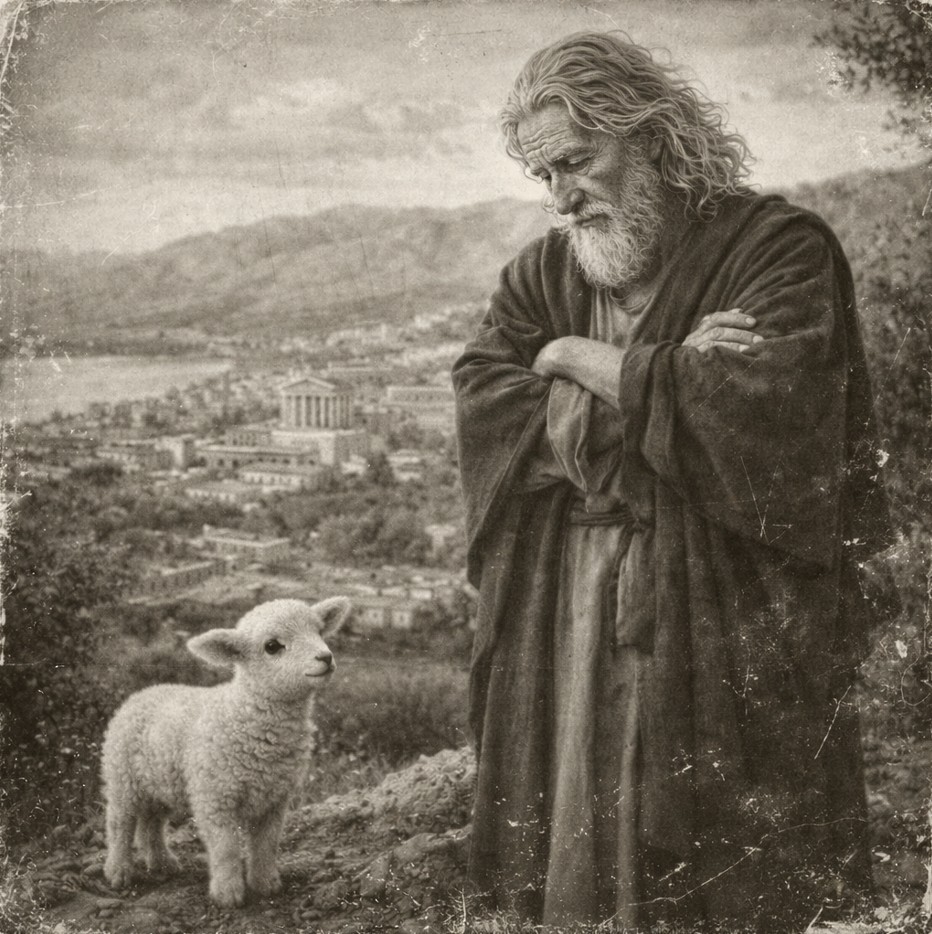
Jesus’ teaching about death is much like observing nature, where death is not an end but a necessary transition into another form. It is a philosophy of maturation, not of punishment and fear. Accordingly, death was, is, and will be part of the material universe — that was God’s original intent. Death is a door leading from the illusion of matter into the realm of true spiritual nature. To fear death is to fear the truth about oneself. The truth is that if a seed in the ground does not die, it will not bear fruit and will never grow into new life.











 Follow Jesus Christ
Leave a comment