The teaching of Jesus can be viewed through a simple but revealing theme — time. In His parables almost nothing happens instantly. A seed goes into the ground, a tree slowly fills with fruit, leaven quietly transforms the whole dough, a disciple follows the Teacher, a house is raised stone by stone, the harvest comes after ripening. Jesus does not speak the language of instantaneous status but the language of a way or a journey. For Him salvation looks less like a seal stamped on a document than like a life that must grow.
Paul presents a different picture. He also knows growth, struggle, the fruit of the Spirit, the renewal of the mind. But his chief words often sound like a verdict already pronounced in the person’s favor: justification, redemption, reconciliation, adoption, grace. Jesus speaks like a sower who sees the future in the seed. Paul speaks like a theologian who explains what has already been accomplished on the cross.
This difference does not necessarily imply a direct contradiction, but it reveals two different rhythms. With Jesus a person is becoming. With Paul a person first receives a new standing before God and then must live it out. With Jesus the emphasis is on transformation. With Paul it is on the event that declares the beginning of a new life.
Traditional Christianity explains this shift by the action of the Holy Spirit. After the resurrection, we are told, the apostles saw more deeply and understood what they had not previously been able to grasp. But Jesus Himself describes the Spirit differently: He will remind them of what was said, guide them into truth, bear witness about Christ, take from Christ and declare it to the disciples. Here the Spirit is less like a new author rewriting the teaching than like a light that makes what has already been said clearer.
Different Christian traditions build their faith around different centers of trust. The Catholic trusts the Church as the guardian of truth. The Protestant trusts Scripture as the infallible foundation. The Christ-centered Christian places Christ Himself at the center. Each insists that it remains faithful to Christ, but each hears His voice through its primary conduit.
This raises a difficult question. If the Church can err, why is it entrusted with deciding the composition of the canon? If the Holy Spirit preserved the Church in recognizing the sacred books, why is that action regarded as infallible here but not in all other matters? If the apostolic texts were given normative weight even though their language and emphases differ noticeably from the language of Jesus, on what basis does their interpretation become obligatory for understanding Christ Himself?
A witness is needed to convey the Teacher’s voice. But a witness does not become a second Teacher. He can preserve the word, explain the circumstances, show the consequences. He cannot surpass the One he explains.
If Jesus is the perfect revelation of God, the ultimate key to Him cannot lie outside of Him. The Church can witness. Scripture can preserve. Apostles and spiritual leaders can interpret. But the final measure remains Christ Himself. His words, His life, and His Spirit must test everything that was said after Him. The ultimate interpreter of Christ can only be Christ Himself.
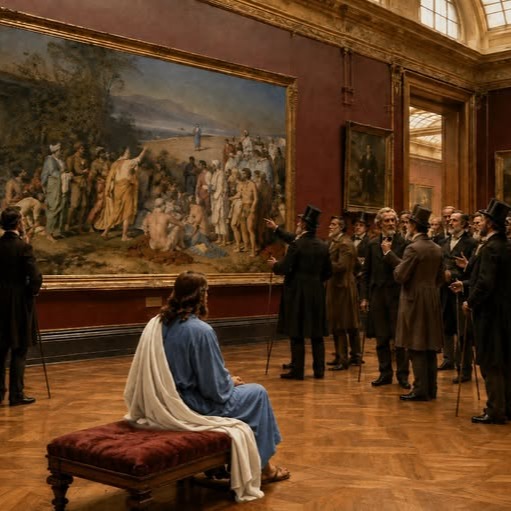
When Moses in the Pentateuch asks, “What is your name?”, God does not delegate the answer to someone else. He answers Himself: “I AM WHO I AM.” In other words, God Himself determines who He is. This idea runs through the whole Bible. A hundred people can argue about what a painting means. But if the artist comes and says, “This is what I meant to express,” his word becomes the absolute criterion of truth and ends the dispute. All other comments remain commentary.
If Christ is the perfect revelation of God, then the final word about who Christ is and what He taught must belong to Christ Himself. All others may be witnesses, disciples, preachers, and interpreters, but they cannot be more authoritative than the One they explain.













 Follow Jesus Christ
Leave a comment