
Why didn’t Jesus write a single line? Why didn’t He allow the apostles to make written records of His words and deeds during His lifetime? We would now have twelve books by the apostles about Jesus. Or one, complete and magnificent, written by Jesus Himself. The rational route to Jesus would have been very easy. Below you will find a modest and wholly personal opinion on why this did not happen.
Jesus consciously did not write any book and did not dictate His thoughts to anyone, as was common at the time. Usually founders of movements and religious teachers try to spread their teachings and popularize them by every available means. Jesus refused to do that. His disciples also did not keep records while He was alive. Otherwise we would have very extensive Gospels. Most likely Jesus made it clear to the apostles that no records should be kept. Perhaps some of the disciples did have secret notes of Jesus’ words, as New Testament textual criticism indirectly suggests. Allegedly there was a Q source on the basis of which the synoptic Gospels arose.
The main reason heavenly figures do not leave detailed books is the imperfection of human consciousness. For many centuries religious awareness has been an emotional experience of spiritual dogmas more than an intellectual understanding of them. Even today the number of people who try to understand God with their reason is not that large. Religion is feelings and emotion for, say, eighty percent of people; only about twenty percent (again roughly) think with their heads. In the Roman Empire that proportion was even smaller. In Moses’ time it was smaller still. For the vast majority religion always needs to be a mystery, not a system of rational thought.
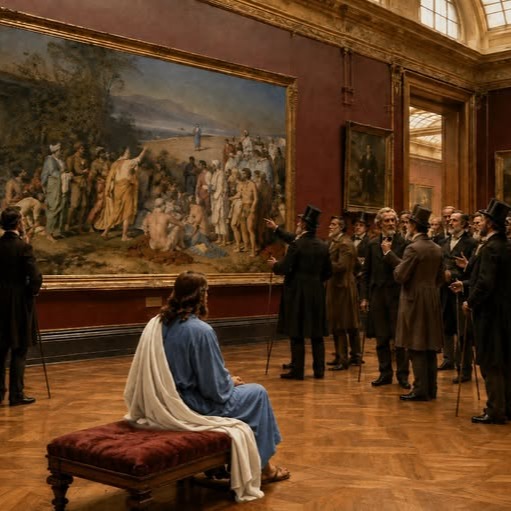
Heavenly personalities do not leave learned books because such books are not understood and are quickly forgotten. If they are understood, then only partially. If there had been a single book written by Jesus Himself, possessing such a relic the ancient mind would first of all have misinterpreted it; secondly, disagreement over how to interpret obscure texts would have been far greater — we would now have millions of denominations rather than thousands. Each new era would have produced a new way of thinking and a new interpretation of the texts. Who knows how many centuries of religious wars with millions of victims there might have been: after all, the denominations would have possessed an “Absolute Relic,” a book sent down from heaven.
Why couldn’t Jesus simplify His ideas, put them in plain language and write a book instead of leaving the first Christians to memorize His words and record them decades later? Any simplification is a departure from the whole truth — an acceptable image of it for a given audience. Many ideas would have had to be omitted because the ancient mind was not ready for them. And even simplifying the text would not have guaranteed a correct interpretation.
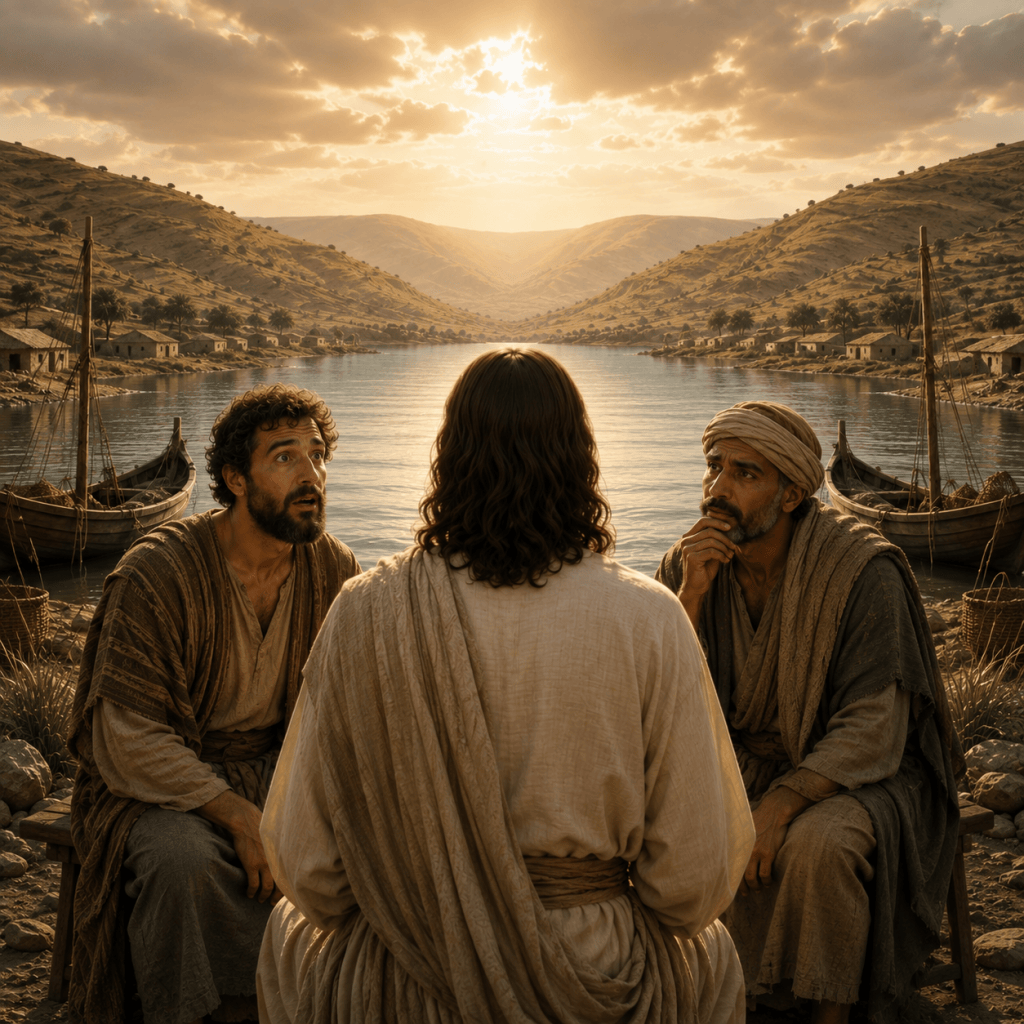
The rational solution in such a situation was to present the teaching orally, to make the apostles grasp it with heart and mind as much as possible, then step aside and wait until the followers produced an interpretation comprehensible to the majority. Yes, it would not be entirely precise, but it would be born on Earth and would be native to the people of its time. Furthermore, the staying power of such a form of religion would be limited, because thoughtful people would understand that the Scriptures did not actually come directly from God. That would give future generations, centuries later, the freedom to rethink the truth in a more developed intellectual context and to break out of the cocoon of ancient assumptions. This is exactly what Jesus did: He taught the apostles orally and gave them the chance to create their own interpretation of Christianity. The New Testament itself states that the first apostles, teachers and preachers argued with one another quite a bit about Jesus’ teaching.
The biblical canon was formed several centuries after Jesus’ life, and that was an organizational necessity. As the eyewitnesses to Jesus’ life began to die, the question arose of how to transmit spiritual truths and other information to the growing communities across the Roman Empire. Churchmen argued over the canon, shouted at each other, and even sometimes came to blows at councils. In the end the New Testament emerged, which united Christians, even if the authentic teaching of Jesus remained in the shadows.
In fact, the four Gospels already contain the core concepts of Jesus’ teaching, set out as simply as possible. The fact that the apostles understood and accepted these basic ideas is what guaranteed their presence in the New Testament. Yet these simple ideas of Jesus are actually very complex; it takes years of reflection to grasp them deeply. From this point of view the apostles’ teaching is much simpler and easier to understand. To comprehend Jesus’ words one needs not blind faith in the church or naive belief in the Bible, but the ability to ask God questions personally and receive answers from above. The Holy Spirit instructs and guides a person toward the Truth every day.
Jesus rarely used mechanisms of power. He did not write laws or create an administrative system. He did not appoint successors, did not compose theological treatises, and left no liturgy. Almost all His ministry was built around living interaction with people, the search for intelligible ideas and images, and freedom in understanding the truth. The absence of a book becomes part of His style and activity. This is not a weak link; it is a hint to spiritual seekers and a source of hope for every day of life.
Why did God make spiritual growth require effort and searching? Why is there no reliable visible road to heaven? Why are there no clear instructions? At the beginning of Christianity God took care more of the majority of people, giving them the chance to create their own version of Christianity. Otherwise it would have been hard for everyone to assimilate the Gospel. Yet even for an intelligent person the narrow path is difficult, and intellect alone does not guarantee salvation. Salvation of the soul, in the sense Jesus understood it — as growth — is accomplished not only by a person but also by God with the help of supernatural spiritual forces. Therefore there is no merely “intellectual trail” leading to God. There is only a path of multifaceted growth.
From this point of view the lack of a precise formulation of Jesus’ teaching is not decisive. God personally corrects human reason; people are not left to chance. The Gospels contain the core concepts of Jesus’ teaching. God works from within each person regardless of the exactness of that person’s ideas. True Christianity, the true Gospel, should never be the religion of a single book. Jesus was the true and living Word of God. He brought to earth a spiritual light, unfading and ever-present. It is he who leads a person to God.













 Follow Jesus Christ
Leave a comment