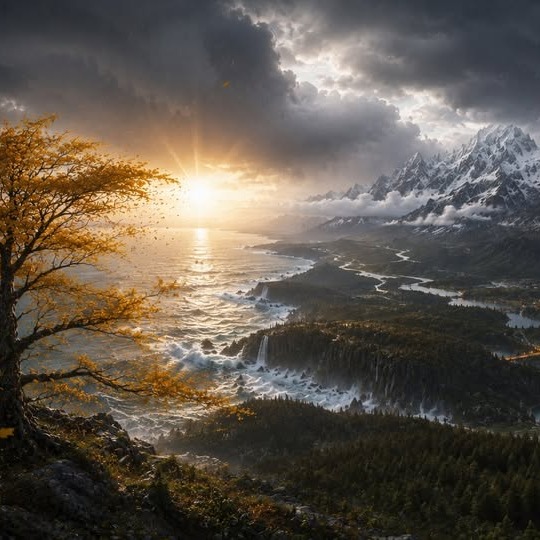
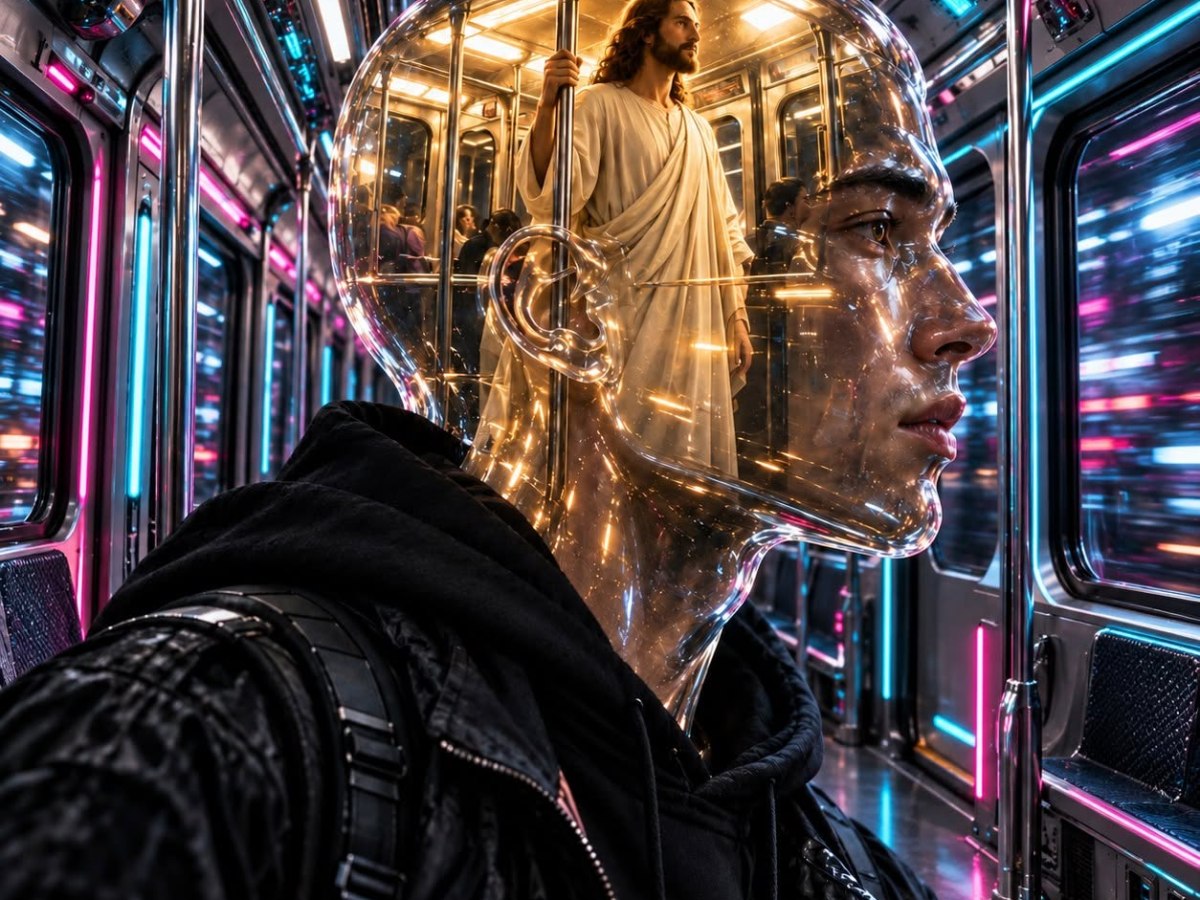
People do not always think in words. Inner speech, images, sensations, and emotions are only the visible part of the processes that take place before a thought becomes conscious. You can imagine a person as a planet, most of which is hidden from their own observation.
Consciousness is like the surface of the ocean. A thought surfaces already formed: “I’m afraid,” “I want to leave,” “I love.” But in the depths memories, sensations, feelings, and associations have already come together. A word is not the thought itself but what has floated up from the deep. Invisible currents run down there as well. One person is carried for decades by fear, another by the need for recognition, a third by curiosity or resentment. Jobs, people, beliefs change, but the current remains. Sometimes it is more important to ask not “what am I thinking?” but “what current is carrying my thoughts?”
Continents are character, values, and self-concepts: “the world is dangerous,” “people can be trusted,” “I must be strong.” Deeper still lie tectonic plates—fundamental orientations like “to survive you must control everything.” Thousands of thoughts can arise on a single such plate. Love, betrayal, loss, war, or crisis cause earthquakes and can sometimes alter the geology of a person.
Mountains are ideas about God, truth, love, justice, beauty. From the everyday valleys they allow one to see life differently. But height does not equal truth: enormous, gloomy ideological mountains can be built on error and lies.
Thoughts are also like plants. Some fade quickly, others take root, produce seed, and become the trees under which a person lives for decades. Words are their fruit. Hearing someone, we see the fruit but not the roots, the soil, the rains, and the climate that produced it.
Mood is weather; a stable emotional makeup is climate. Today a storm may pass over a person, but you cannot judge the whole planet by today’s weather. Cities are the organized world of consciousness: language, profession, education, social roles. We easily take a well-lit, comfortable city for the entire planet, forgetting the territories beyond its borders.
Beneath the surface there is magma. Rage, panic, passion, an unexpected deed, a religious or creative breakthrough seem like sudden eruptions. But the magma has existed long before—the surface never saw it. The atmosphere resembles psychological boundaries. Too dense, it lets nothing new in; too thin, it leaves a person defenseless against others’ opinions and emotions. A healthy atmosphere does not isolate but filters.
The planet does not exist alone. Other people are other planets; families are systems; communities and cultures are constellations. There are stars—personalities, ideas, religions—around which human worlds arrange themselves. There is a vast cosmos. A person can spend a lifetime studying their surface and one day look up and discover the sky.
We try to manage individual thoughts even though their source may be climate, soil, or tectonic movement. Sometimes it is not enough to replace a bad thought with a good one. You need to see the ground on which it grew.
The central theme of Jesus’ preaching is the Kingdom of God, and it is often described as growing life. A person is not a mechanism to be fixed but soil on which something must grow. In the parable of the sower one seed falls on different soil and yields different results. The seed is the new content, the soil is the inner world, the roots are assimilation, the thorns are fears and desires, the fruit is the transformed life. To hear is not yet to be changed.
In another parable a man casts seed and it grows—“he knows not how.” Likewise a person notices that they are less afraid, have learned to forgive, have become more patient, but did not see the inner restructuring itself. Consciousness sees the sprout, but not the work of the roots.
The kingdom is also like a mustard seed. A small thought—“I don’t have to repay evil with evil”—can take root and, over years, change relationships with loved ones, enemies, the past, and oneself. First one plant, then a whole forest.
Therefore Jesus invites us to wait for the fruit. One can know the theology of love and remain cruel, speak of humility and live obsessed with status. You can put up a sign reading “Garden here,” but the fruit will show what actually grew. Words also come “from the abundance of the heart”: the mouth is the surface, the heart is the depth. Jesus moves from action to source: from murder to anger, from outward righteousness to desire, from mercy to motive. He seems to descend into the genetic geology of the human person.
Sin can be seen not only as a violation of law but as destruction of the inner ecology. Hatred salts the soil, fear turns the ground into a fortress, greed exhausts it, pride builds a mountain from which nothing else can be seen. Love, forgiveness, mercy, trust, and truth make the soil fertile. “Be perfect” can be understood not only as being faultless. Teleios carries the idea of maturity, of reaching the goal. Not a hundred points out of a hundred, but a ripe fruit.
Jesus does not merely provide information about God—he sows a seed. It must land in the soil, survive the night, put down roots, break through the surface, withstand the heat, and bear fruit. The fruit in turn contains seeds: a changed person changes the environment around them. The gospel can be imagined not only as saving a person from a bad planet but as bringing life into the human planet itself.
A person changes not when they have heard a new thought but when their inner soil has received it and allowed it to take root. “He who has ears to hear, let him hear”: many hear, but in not all does what is heard enter the soil. Growth requires plasticity—the ability to let truth change the structure of one’s own planet.
Nature lives by seasons. Temperature, humidity, roots, microorganisms change. Fallen leaves become organic matter. Growth is followed by fruit, dying, decomposition, and new growth. Spring suggests receptivity, summer growth, autumn fruit and release of the spent. In winter nothing may appear to happen, but the absence of visible growth does not mean the absence of life. Old leaves have already fallen; new ones have yet to appear.
What is dead in the soil becomes material for future life. The same is true of a person’s past. A shattered belief, a failure, or a completed stage can become new soil. Someone may have understood God a certain way for twenty years and then see the limits of that understanding. The old has died, but the experience remains and can nourish a more mature grasp.
Plasticity does not mean endless softness. The soil needs stability; otherwise any idea will rearrange it. A healthy inner planet can hold its shape and yet change. The seasons combine steadiness and change.
Inner winter is not the opposite of growth. It can be part of it. Perhaps the spiritual person does not need to force growth all the time. One needs to discern the season of one’s soul: when to sow, when to tend, when to harvest, when to let the old die, and when not to dig up a seed every day to see whether it is growing.











Leave a Reply