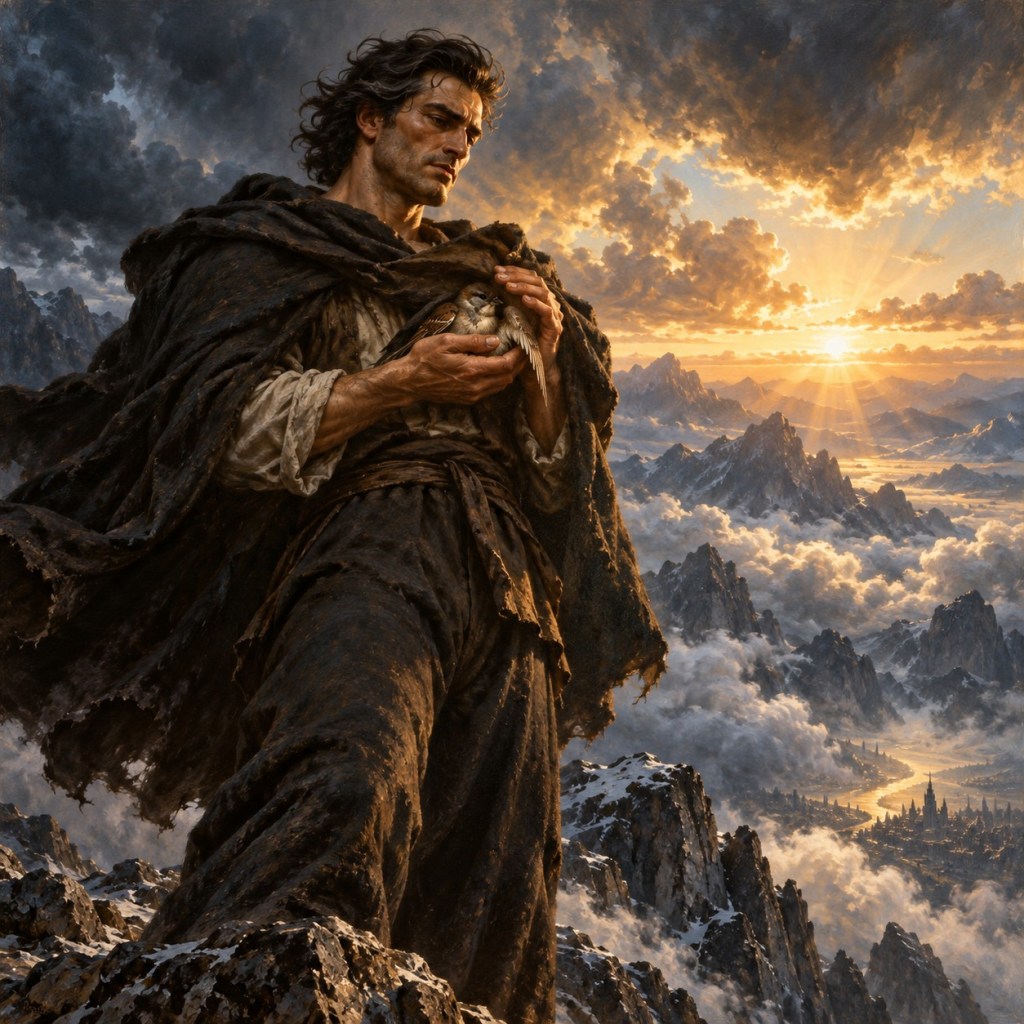
A caterpillar becomes a butterfly. We have known this since childhood and have almost stopped being surprised: a creature whose whole life took place on the surface of a leaf one day unfolds its wings. But what if the possibility of change is hidden in a person as well—change that cannot be imagined from inside his present life?
The most shocking things happen suddenly. The person opposite lifts his eyes, and you understand: he still recognizes you, but the world in which you were the same has already vanished. In the Strugatskys’ Waves Extinguish the Wind this anxiety is given a name—the “Bromberg Memorandum.” Humanity may split: a small part will go so far that the word “human” will become a memory of origin. “Lyudens” will appear. The door at the top of the stairs will open from inside our species.
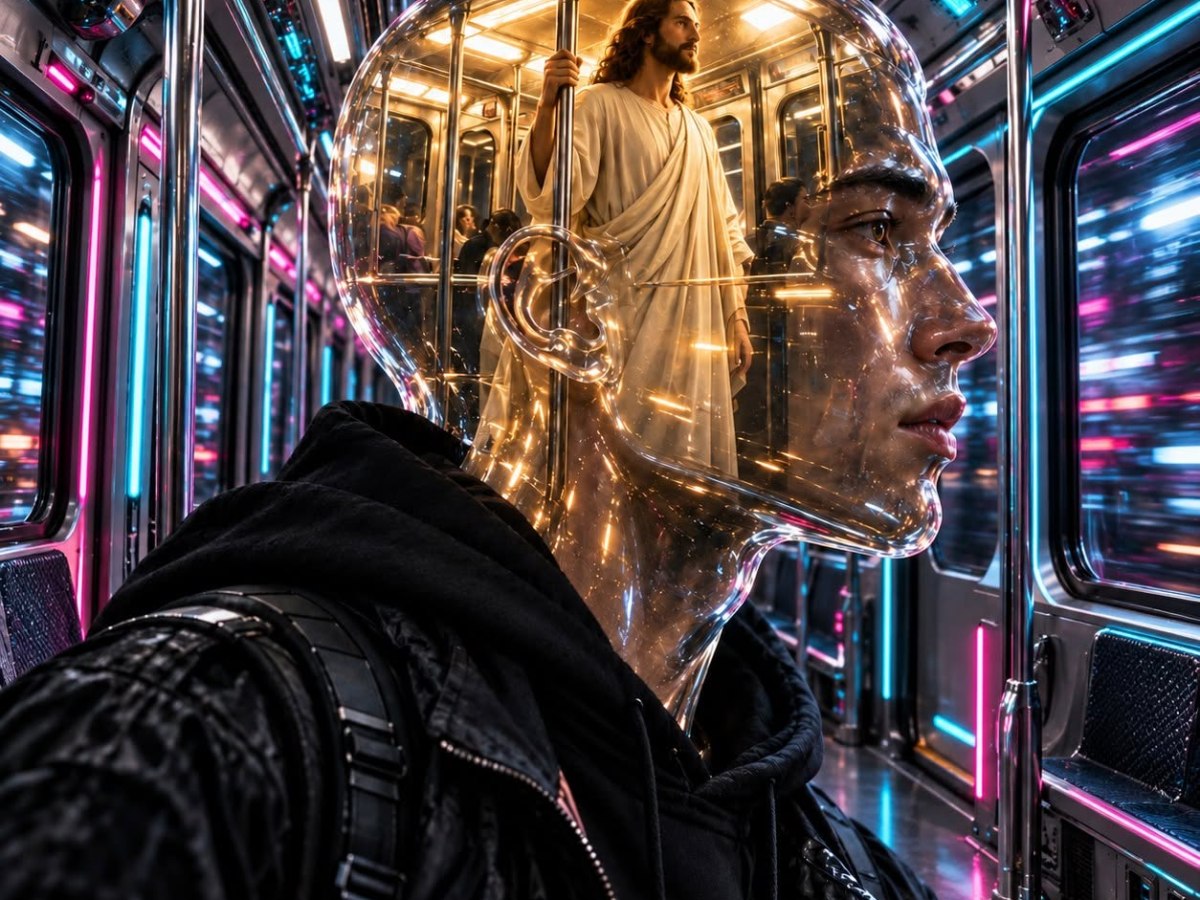
They will keep familiar faces. The space behind their eyes will change. Our arguments will sound to them like noise behind a wall, our peaks like bumps on a floor. They will have no need to seize the human world: their capacities and interests will already lie beyond its bounds. Wealth, power and popular approval may turn out to be toys an adult finds one day in a dusty box. We spend our lives fighting for titles and fortune without ever checking whether the game is worth continuing.
The idea of human incompleteness, of human evolution, has long wandered among people. Buddha speaks of awakening, Nietzsche sees man as a bridge, Jesus speaks of being born from above. Their paths diverge, but each in its own way disturbs our certainties: the familiar condition is not necessarily the limit. Perhaps we named as the last room a place where the stairs are only beginning.
The modern system of bodily and meditative practices called HORA links this hope to conscious evolution. There emerges the “transgravitational human”: the very mode of his presence in the world changes. Body and mind gain wholeness, action unites with repose, the boundaries of the skin cease to feel like the limits of existence. Earth and Cosmos become an environment of conscious participation. That is the image this model proposes; interaction with fields and a new stage of evolution remain its assertions, not established facts.
There is an alluring depth to that picture. Man is no longer a solitary observer at the cold glass of a dark Universe. He is engaged in what happens, partaking of light and energy flows. But the Gospel opened a door beyond loneliness long before such constructions.
At night Nicodemus comes to Jesus. The respected teacher hears that he must be born from above. All the accumulated knowledge he has suddenly stands before a threshold that cannot be crossed by previous achievements. Nicodemus asks if one must return to the mother’s womb. Jesus speaks of the Spirit. Outwardly a person may remain the same, yet the source of his life changes. Paul will call this a new creation and urge putting on the new self. In the Second Epistle of Peter an even bolder promise sounds—to become “partakers of the divine nature.” From this perspective human existence is opened to participation in the life of God. But such participation requires a transformation of life itself, not merely an extraordinary experience.
The image of the vine and the branches in Jesus’ teaching helps reveal this connection. A branch keeps its shape while drawing life from a common source. Personality does not disappear: it loves, responds, bears fruit. A person continues to walk the streets, earn money, hear others’ judgments, but understands the gain differently. He can give way without feeling humiliated. Do good without witnesses. Refrain from revenge, though the opportunity lies before him like a knife left on the table.
Then peace becomes trust. I can act without trying to hold the whole heavens in my own hands. We who live on Earth are not yet superhumans. In Gethsemane Jesus grieves and asks that the cup pass from him. Closeness to the Heavenly Father does not remove the pain along the way of life. The new person can tremble with fear and still remain faithful. Promises of constant serenity are made by those who are mistaken. Jesus himself prayed in the dark garden before his arrest.
The cosmic field of modern theories and the Father are not interchangeable. They are not the same thing. One can trust the Father, turn to him, accept his will. Magnetic interaction by itself says nothing about love. You cannot derive a physics of consciousness from the vine image, nor can being born from above be made into management of the evolution of the Universe. The beauty of the resemblance between Jesus’ teaching and modern cosmic theories is undeniable, but we have the duty to notice the differences.
The “lyuden” poses a troubling question: will intimacy remain when the world disappears? Will a few superhumans need millions of ordinary, imperfect kin? The Gospel tests the transformed person precisely by this closeness. One who has become freer and stronger is given by God the opportunity to serve. Greatness is measured by the willingness to stoop to another’s need. Paul takes the test to merciless extremes: even knowledge of mysteries and faith able to move mountains give a person nothing without love.
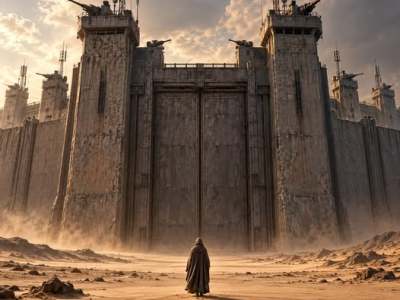
Imagine the last door. Beyond it open spaces and cosmic worlds that have no names yet. A human touches the door’s surface with his palm, and it recognizes him. He steps forward into the light of Eternity when a faint call sounds behind him. Someone has been left there—slow, frightened, for now unable to follow—but he discerns the mysterious light ahead with his weak faith. The door is open. The person pauses for a moment, turns, and goes back. What exactly has become new in him? Mercy and compassion are essential for people with super-abilities, for the new species of the evolving human.









Leave a comment