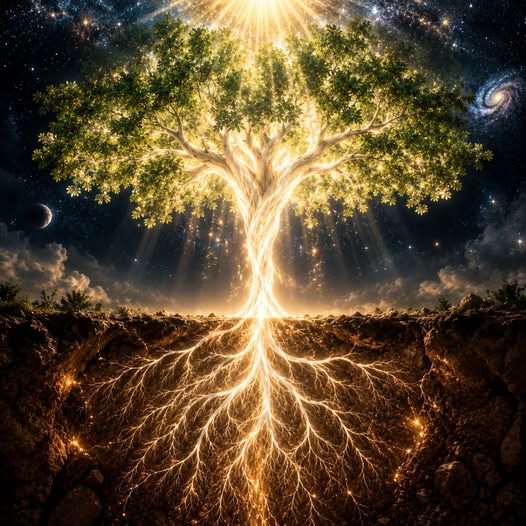
Imagine a huge old tree. An oak a hundred years old. Several tons of wood. Its roots plunge deep into the ground, the trunk rises out of the soil, the branches spread overhead. It seems perfectly obvious where it came from. From the earth. After all, it literally comes out of it. But don’t be too quick.
Aside from the water, the overwhelming majority of the dry mass of that giant did not come from the soil. The ground beneath the century-old oak did not vanish and turn into the trunk. Several tons of material arrived by another route—so subtle that people looked at trees for millennia without understanding what was happening.
The tree’s main building material is carbon. And it gets almost all of it from the air. Invisible carbon dioxide enters through the leaves’ microscopic stomata. Then photosynthesis happens: using the energy of light and water, the plant turns carbon into organic substances from which leaves, branches, trunk and even roots are gradually built. The tree is built from… air.
Water comes mainly from below. With it the roots take up nitrogen, phosphorus, potassium, calcium, magnesium, iron and other necessary elements. They are vital. But the mineral part usually makes up only a few percent of a plant’s dry mass. The enormous tree is to a great extent built not from the earth but from what was once an invisible gas around it.
But there is another participant in this “crime against common sense”—the Sun. Light itself does not become wood, but it supplies the energy for its creation. If you imagine the tree as a construction site, the gases of the air and the water are the materials, the minerals are the essential additives and equipment, and sunlight is the power without which the job would stop.
And that energy doesn’t disappear. Cut down a century-old tree, dry the wood and throw it on a fire. After a few hours some of the energy the plant stored for decades in chemical bonds will burst out as heat and light. The bonfire before you is, in a sense, the return of ancient sunlight.
So what does that mean? Before us is a massive trunk that seems to be the very embodiment of the earth. Yet a large part of its carbon once floated in the air as an invisible gas, and the energy of its creation came from space from a distance of about 150 million kilometers. We simply didn’t notice.
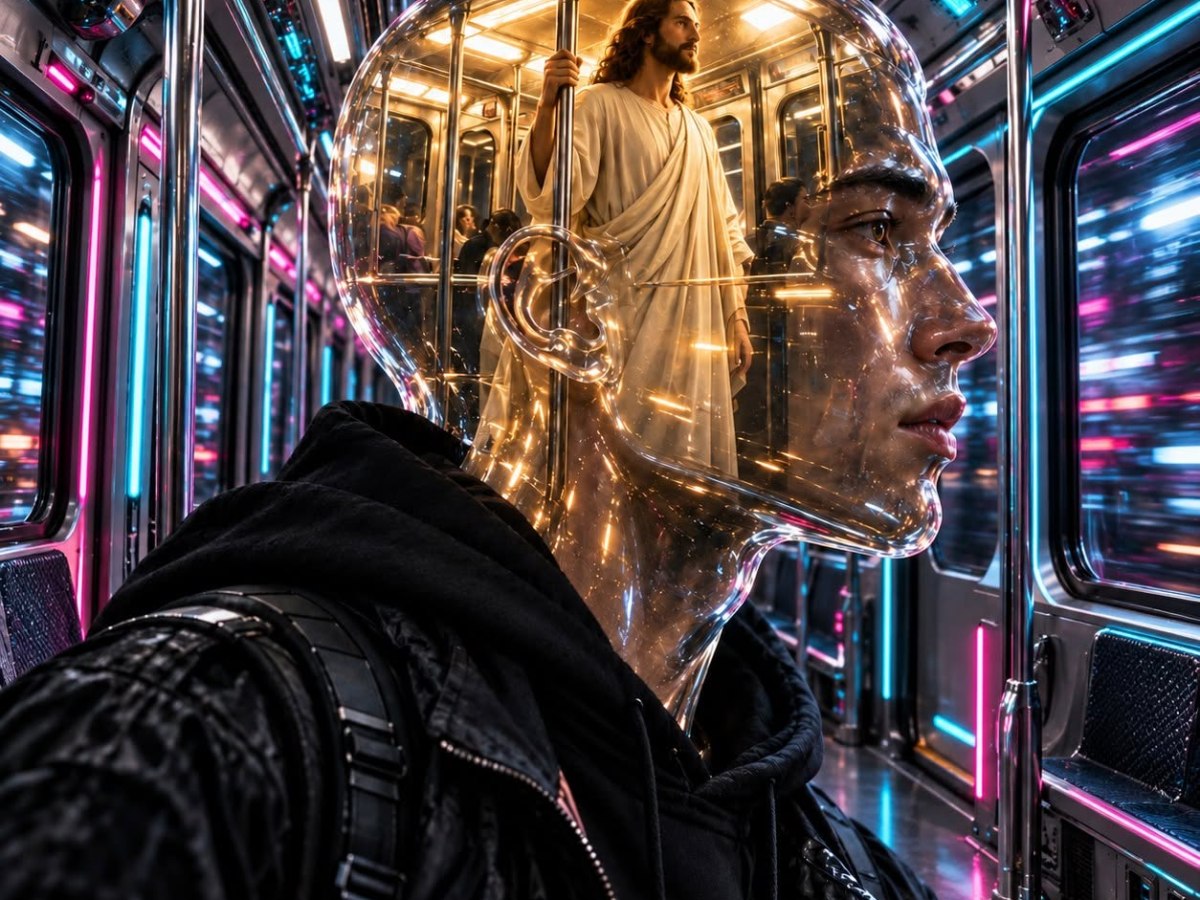
It turns out the tree, in a sense, grows from above. Not literally, of course. But as a metaphor this is unexpectedly close to physical reality. And here we need to say something no longer strictly about botany: what something stands on isn’t necessarily what it comes from. Perhaps this is the mistake we make when we look at a human being.
A person is also rooted in the earth. They need food, water, shelter, money, security, work, other people. Jesus never denied this reality. But He said, “Man shall not live by bread alone.” Yes, bread is necessary. But bread is not enough.
We’re used to explaining a person from below. Biology. Economics. Instincts. Social status. Competition. Money. Sex. Fear. The struggle for existence. All of that exists. All of that—our roots. The error begins when we decide that because a person’s roots are in the earth, the whole person comes only from the earth.
Jesus said, “Consider the lilies of the field, how they grow.” An ancient listener would not have known about photosynthesis. We do. So today we can hear an additional layer of metaphor in those words without putting modern science into Jesus’ mouth. The plant seems to say: I stand on the earth, but I do not live by earth alone. And the human being is arranged similarly.
Jesus mentioned the wind. He said the wind blows where it wishes; we hear it, but we do not know whence it comes or whither it goes. Such is the one born of the Spirit. The wind is like the carbon dioxide that builds multi-ton trees. Yet it is invisible. You only see the leaves move. So the Spirit is invisible. You see only the change in the person.
Perhaps that is why a purely materialistic and cynical view of human life deserves rethinking, at least as a philosophical hypothesis. Even the tree turns out to be far less “earthbound” than it seems. It exists at the intersection of flows: the substances of the earth, the substances of the atmosphere, and the energy of the Sun. Life on Earth is literally embedded in planetary and cosmic-scale processes.
Undoubtedly you cannot separate a tree from its roots. A tree that gets all the light it wants will die without water and minerals. And Jesus’ spirituality does not require treating the body, work, bread or human relationships as something inferior. Earth and heaven are the parents of the human person. The earth gives a person a place to exist, and what is received from above gives the energy and the space for growth. The tree proves to be an astonishingly apt metaphor for describing a human being. It connects two worlds. With its roots it takes in water and minerals. With its leaves it takes in carbon dioxide. By light it gets energy. And then it turns the invisible into the visible.
Jesus taught, “I have come that they may have life, and have it abundantly.” Human beings are given vast resources and possibilities. A person cannot flee from earth to heaven, but can unite what comes from above with earthly life. So the invisible becomes visible: love—by action, forgiveness—by reconciliation, faith—by courage, sonship—by treating another person as a brother.
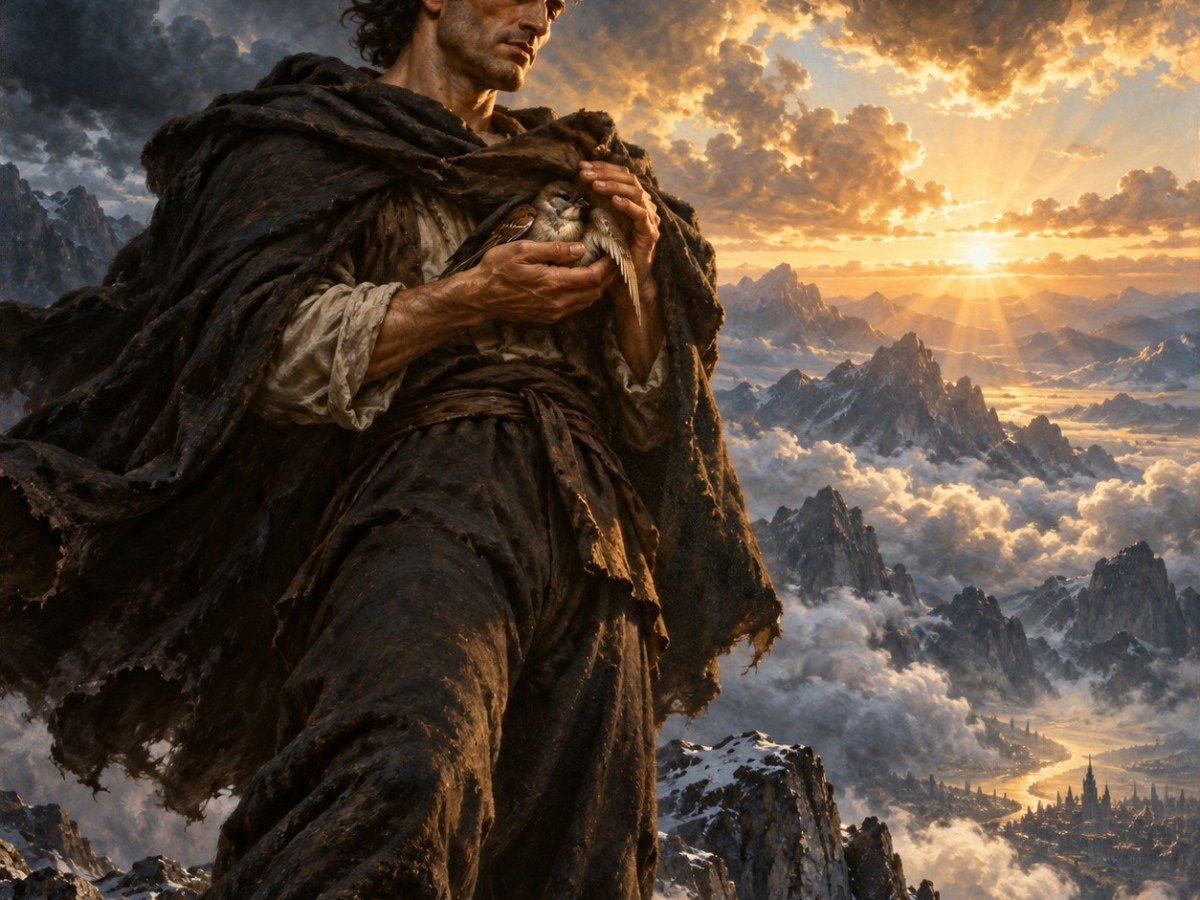
We looked at the tree and thought we knew where it grew. We were simply looking in the wrong direction. Lift up your heads. Look to the stars.










Leave a comment