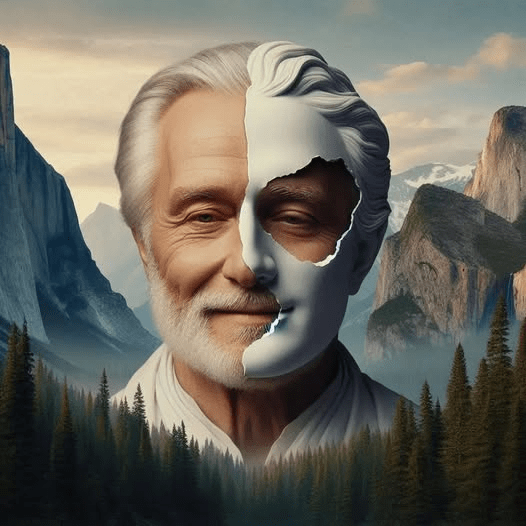
The man Jesus healed of congenital blindness suddenly found himself in a difficult situation. Having seen the light for the first time in his life, he almost immediately came under pressure from the religious authorities.
Right after his sight was restored he was summoned before the Pharisees, who tried to persuade him to renounce the Man who had given him sight — Jesus. According to a later tradition, the healed man may have been called Josiah. He had known nothing of Jesus or his teaching before the miracle, but nevertheless he refused to recant. More than that, Josiah offered a simple yet profound observation: such miracles could only be done by the power of God. He did not speak as a theologian but as a man who had for the first time encountered the manifest power of God.
That honest conclusion provoked rage. The Jewish leaders would not accept his testimony: they had centuries of authority, but the formerly blind man had what they lacked — personal experience of meeting God. In response to his words they expelled him from the synagogue. In those days this meant more than being barred from assemblies — a person was effectively cut off from his community, his support, and his religious identity. On the very day of his healing the formerly blind man was cast out of the synagogue simply for what he had said. Could he have imagined that morning what awaited him? How surprising the turns of fate can be in our world!
When Josiah was left alone, Jesus sought him out. This is an important detail: Jesus always finds those whom others reject. He asked him directly, “Do you believe in the Son of God?”
Josiah asked, “Who is He, Lord?”
Jesus answered, “You have seen Him, and He is speaking to you.”
Hearing this, Josiah confessed his faith and, as was customary then, bowed before Him. Deprived by the authorities’ unjust decision of membership in the synagogue, he gained something greater — a place among Jesus’ followers, a place given not by him but by the Teacher Himself.
Sometimes you have to lose something to gain what really matters. Sometimes the loss of an old identity is the door through which a person enters a new life. As long as Josiah remained part of his familiar religious environment, his story was predetermined: he was poor, blind, dependent on passersby’s mercy, and entirely invisible to society. His place in the world had been fixed in advance, and, as often happens, those around him believed a person could not step outside what he had “always been.”
But when he gained sight and was expelled from the synagogue, the old identity collapsed. It was painful, humiliating, and unjust — but into that crack the light entered. While a person clings to the old, there is no room for the new. Loss can become liberation, even if at first it appears as punishment.
The Bible is full of similar stories: Abraham leaves his father’s house, Moses departs the palace, Peter abandons his boat and nets. Each of them lost a former “self” — but it was precisely this loss that allowed them to become who they were meant to be. Loss is not an end but a turning. It breaks the familiar shell to let the new inner person emerge.
So it was with Josiah. He was excluded by society, but Jesus received him. He lost the religious system but found the living God. The synagogue door was shut to him — but a door opened that led to genuine spiritual freedom.
Sometimes God will not keep us in the old, even when it is safe. He leads out, tears away, shakes — because without that a person will not dare to step into the future intended for them. What looks like loss may, in fact, become a new name, a new path, and a new life.













 Follow Jesus Christ
Leave a comment