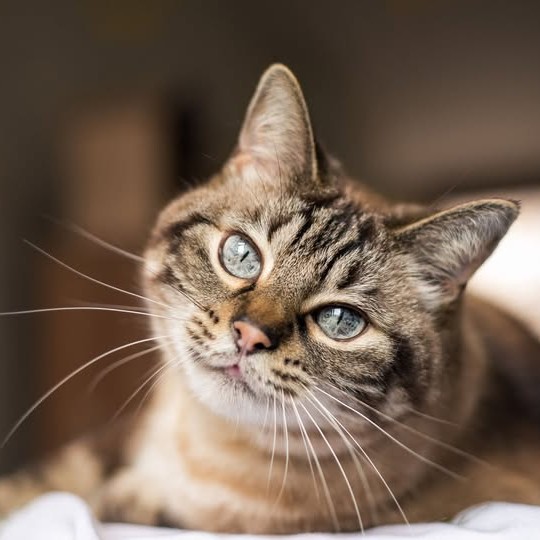
Why are cats so unflappable and calm? “Cat calm” is a blend of several things: the wiring of their nervous system, a survival strategy, and the behavioral traits of a predator.
A cat is a solitary ambush hunter. For that kind of predator it pays to lie still for long stretches, conserve energy, hide its emotions, and strike sharply only when the moment is right. Calmness in a cat isn’t just “personality” — it’s an evolutionary strategy. An animal that is constantly fussing hunts worse and tires faster.
Cats sleep 12–16 hours not because they’re lazy, but because their bodies are built for short, intense bursts of activity. Biologically a cat accumulates energy, then makes a sudden surge, then returns to rest. That’s why they can seem like peculiar “zen beings.”
People and dogs often wear their emotions on the outside — facial expressions, sounds, body movement. Cats are emotional too, but they express it much more subtly: by the position of their ears, tail, pupils, a slow blink, tiny movements. That’s why people tend to think a cat is “unflappable.”
For a cat, feeling that its space is controlled is crucial. If the territory is familiar, there’s shelter, food is available and there are no threats, the nervous system settles into a steady mode. The cat literally dissolves into calm.
People often treat cats almost like “little Buddhists.” Not because the cat understands philosophy, but because its behavior matches human ideas about presence, unhurriedness, and lack of needless anxiety. Hence so many texts where the cat becomes a symbol of living “here and now.”
Let’s read a playful poem about cats. It’s interesting because the cat in the poem speaks about the present moment almost like a Stoic or a Zen teacher.
The other day I talked with a cat,
Since he seemed in the mood for a chat.
He said, “There is no later on—
Just this moment you’re living upon.
Cats have known this for ages, you see:
If you’re calm, then the world’s company.
It’s enough just to sit by a pane,
Watch the daylight and watch the rain.
There are wonders in boxes and bags,
Supper waiting in bowls without tags.
If you’re hungry, then eat. If you’re tired, then sleep.
Why collect all the worries you keep?
When your thoughts start to spin out of line,
Wash your face and you’ll probably be fine.
And a ninth life? Well, that’s just one more—
Much like seven or five before.”
“But what comes in the end?” then I cried.
“Surely death will be waiting outside!”
The cat yawned, gave his tail a slow sweep,
Then continued his grooming in peace.
“You’ve forgotten,” he said with a purr,
“There is no later on to prefer.
There is only this patch of warm sun—
And by then, you’ll be done what you’ve done.”
(Sergey Plotov)
Jesus’ teaching about the present moment sounds especially vivid in the Sermon on the Mount: “Do not worry about tomorrow, for tomorrow will worry about itself. Each day has enough trouble of its own.” This is not an encouragement to be irresponsible, but a pointer to a different structure of consciousness. A person loses life not only because of suffering, but because of constantly living in a non-existent future. The future hasn’t come yet, and already it is stealing energy, attention, and the ability to see reality.
Life happens only in the present. The past exists as memory; the future as hypothesis. The only place where a person truly lives, acts, loves, and changes is the present moment.
This idea appears in Marcus Aurelius as well: “A person lives only in this moment. Everything else is either already lived or unknown.” Jesus says something similar when he points to “the birds of the air” and “the lilies of the field.” He pulls people back from the internal catastrophe of endless thought into the living reality of the world. Anxiety often masquerades as responsibility; in fact, a person simply runs endless scenarios for which they have no control.
Jesus poses a near-psychological question: “And which of you, by worrying, can add a single cubit to his life?” The point is radical: worry does not increase life; it diminishes it. Seneca later put it similarly: “We suffer more often in imagination than in reality.”
A person can live through dozens of tragedies in their head that will never happen. When consciousness is wholly consumed by “what comes next,” a person stops noticing the present: children, friends, beauty, conversation, the breath of life.
Jesus constantly returned people to the concrete moment: feed the hungry now, forgive now, see the suffering now, follow him today — not “someday later.” For Jesus, Christianity is not a theory about some distant future event but a way of existing in the present.
Many decisions are made not out of love and truth but out of fear of loss, poverty, loneliness, and death. That is why the Gospel so often repeats: “Do not be afraid.” For Jesus, fear isn’t just an emotion — it’s a force that gradually paralyzes the inner person.
Erich Fromm wrote that modern people often “sacrifice life for security.” In other words, they try so hard to avoid future risks that they stop truly living.
The present moment is the only place where an encounter with God is possible. This is one of the deepest notions of the mystical tradition. You cannot love “tomorrow.” You cannot repent “in the future.” You cannot be alive “when everything is fixed.” All genuine spiritual movement happens only now.
Blaise Pascal has a strong thought: “We almost never live in the present; we only prepare to live.” People are always building an inner corridor to life but never stepping into it. Many think: just a little more money, one more job, one more victory, one more stage — then life will begin. But life keeps being postponed.
Jesus often spoke of the Kingdom of God as something already beginning inside a person, not only as a far-off event after death. This is an important shift: purpose cannot be infinitely postponed.
The present is imperfect, but growth happens there. Living in the present doesn’t mean constant pleasure, like a well-fed, contented cat. Sometimes the present moment is hard, anxious, or painful. But it is there that a person becomes a person. The future is an idea. The present is the place of personal change.
So Jesus’ point is not simply “relax and don’t think.” Rather it is: do not give your soul to fear, do not live inside imagined catastrophes, do not postpone life and miss the reality in front of you. Today a person can love, understand, forgive, see, change, and begin to move.
In the poem the cat doesn’t philosophize in abstract systems. He simply exists. And there is a clear parallel with Jesus’ words: “Be like children.” Not in the sense of naivety, but in the sense of immediate perception of the world. An adult is often so fractured by anxiety, comparison, and inner noise that he no longer knows how to eat calmly, be quietly silent, look out the window calmly, or simply be.
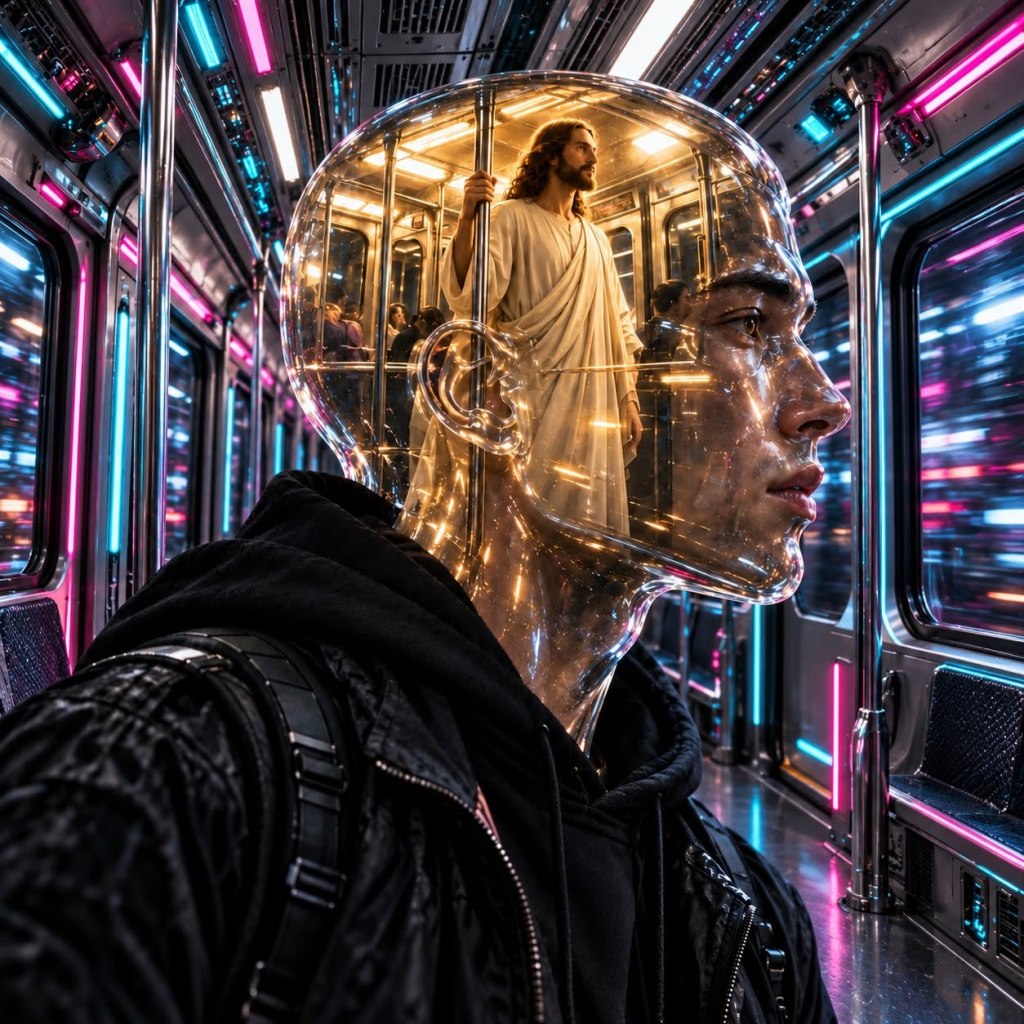
The worst thing is not death, but an unlived life. Perhaps this is the core truth expressed both in Jesus’ teaching and in the poem. People fear death, but it is far more tragic to live in constant waiting and fear, continually postponing life and never entering one’s own existence. The cat in Plotov’s poem speaks an almost paradoxical line: “You forgot that there is no ‘later’.” In a sense Jesus says the same: life is not a corridor to a future moment. It is already happening. Now. Live now!









Leave a comment