
Our planet is Earth. On its surface the oceans roar, forests grow, the seasons change, cities arise and whole civilizations come into being. People love and hate, build homes, make discoveries, are born and die. It seems that everything most important happens right here.
But all this life exists only because of an invisible center of gravity. It does not control every tree or command the clouds where to go. It is almost imperceptible. Yet it is precisely because of it that the atmosphere does not drift off into space, the oceans stay where they are, and the planet itself does not fall apart into an infinite number of separate pieces. If that center were to disappear, not only would life vanish. The planet as a unified whole would cease to exist.
The human person is remarkably like such a world. Thoughts are constantly replacing one another. Today’s feelings are not the same as yesterday’s. Beliefs, habits, even the cells of our bodies change. And yet amid this continuous movement a person continues to say, “This is me.” What holds all this together?
We are accustomed to thinking that consciousness is the center of personality. But consciousness is more like the planet’s surface. It is full of motion, noise, change. Thoughts come and go. Emotions arise and fade. Memory preserves some things and loses others forever. And yet there is something deeper by which a person remains himself.
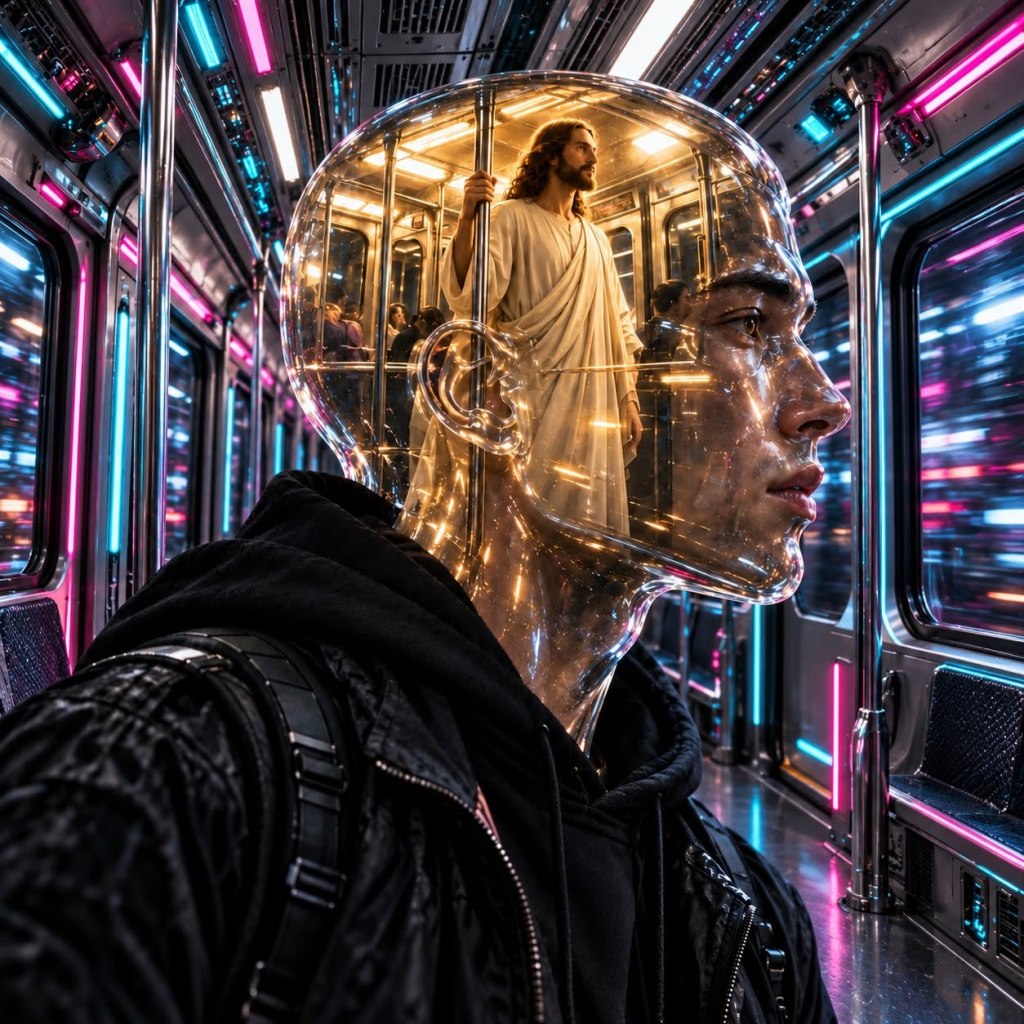
Perhaps this is what Jesus was speaking about. Not the external dependence of a person on God, but the inner foundation of his life. God does not replace the human person or take away a person’s freedom. But, like the invisible center of gravity, He is the depth by which human life can be a unity at all.
Then Jesus’ words, “without Me you can do nothing,” sound quite different. This is not a demand for submission. It is a description of reality. Just as a branch cannot live apart from the vine, so a person is not the source of his own being. We were given life, the ability to love, choose, think and create, but we did not make these things ourselves.
That is why Jesus repeatedly called God Father. Not because he wanted to offer a pretty religious image, but because he saw in each person something that has one origin. If the deepest ground of our personhood is in God, then the words that all people are children of God and brothers become not merely a moral ideal but a description of human nature itself. And this is the true essence, the core of Jesus’ teaching.
We see in one another temperament, convictions, faults, virtues, nationalities and religions. God, perhaps, sees deeper. He sees that invisible center by which each person is capable one day of hearing the truth, loving the good and becoming more than himself.
The planet does not know its center of gravity, yet every tree grows because of it. A person, too, may fail to notice God’s presence, but his entire spiritual life begins precisely with that imperceptible foundation.
And perhaps faith does not begin when a person seeks a distant God in the sky, but when he discovers that the deepest source of his own personality has always been near. Closer than thoughts. Closer than feelings. Closer than the very word “I.”












Leave a Reply