
Christians rarely adopt new religious ideas quickly. And it’s not just stubbornness. Most people organize their inner life around familiar notions of God, goodness, salvation, and the meaning of life. Those beliefs become part of who they are. That’s why abrupt spiritual revolutions almost never work. A person can hear a new idea and be intrigued by it, but inwardly will still cling to what helped them live before.
Jesus understood this perfectly. When He spoke of “new wine,” He did not expect society to change overnight. To the religious world of His day His ideas sounded too unusual. Yet He wasn’t trying to create a complex philosophical system. He gave his disciples something more important: a way to look at a person, to understand their inner life, and to lead them toward change gradually.
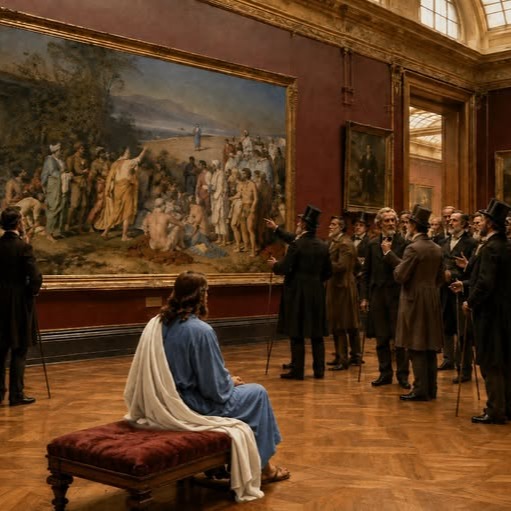
It’s interesting to observe how this plays out today. Recently I spoke with an educated philosopher and psychologist. He’s a Christian, practices various self-development techniques, studies inner processes, and tries to better understand emotions, reactions, and psychological mechanisms. He’s open to experiments and searching. Yet in theology he clings to a simple, long-familiar scheme he is reluctant to revise.
At first glance that’s not a problem. But it was clear that his psychological inquiries and his religious convictions seemed to live in different rooms. He understands the complexity of the human personality perfectly well, yet speaks about spiritual life in overly simplified terms. And I think a great many contemporary believers live this way: one part of the person develops while another seems afraid to move.
There is good news, though. A person can change much more slowly than they think and still move forward. Big changes almost always happen gradually. That is why the history of Christianity is not a story of instant upheavals but of the long adaptation of Jesus’ ideas to new eras and cultures.
The first disciples of Jesus faced a very difficult task. They had to explain His teaching to the vast Roman world, which thought in very different ways. Greeks loved philosophy. Romans valued order and strength. Some people sought mystical experience, others moral discipline, and still others political stability.
The apostles found a language that made sense to their contemporaries. Particularly important was the idea of freedom. Paul constantly speaks of “freedom in Christ.” For some this sounded like liberation from religious fear, for others a release from guilt, and for others a way to approach God without a complicated system of rituals.
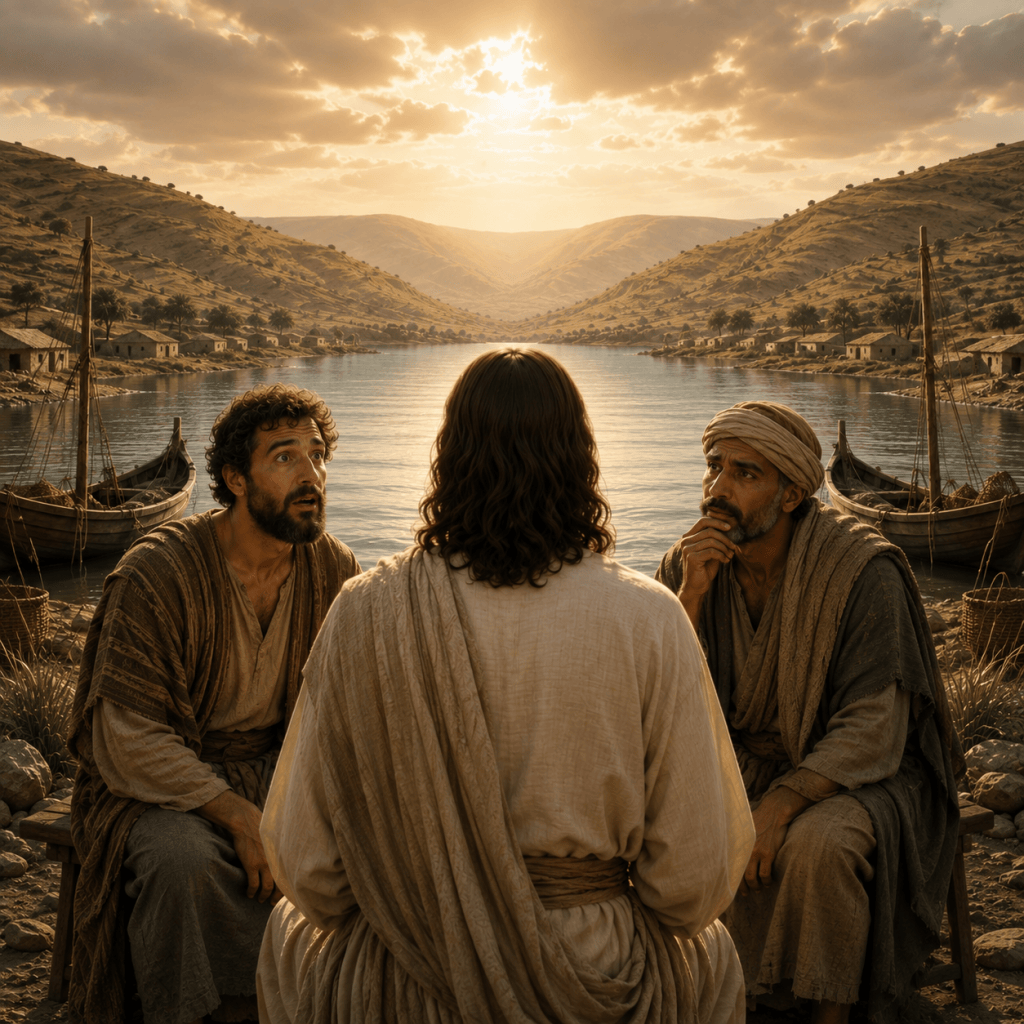
In essence, the apostles became a bridge between Jesus and the civilization of their time. They did not simply repeat the Teacher’s words verbatim. They explained them so that people would actually want to listen. And because of that, Christianity was able to spread far beyond Judea and transform the ancient world.
That sometimes draws criticism. Some think the apostles adapted Jesus’ ideas too much to the surrounding culture. But looking more broadly, it becomes clear that any living idea must be translated into the language of its age.
For example: a good teacher explains a complex science to a child with simple images. A doctor explains a diagnosis to a patient in plain language. A programmer makes complex technology easy for ordinary users. This isn’t necessarily betrayal of the truth. Often it’s the only way to convey it to people.
The same thing happened with early Christianity. The apostles spoke to the world in terms the world could understand. That is why their influence was so great.
I think this question remains important today. How do we speak about Jesus to the modern person? To people who grew up amid psychology, technology, anxiety, social networks, a crisis of trust, and constant information noise?
Probably the task of the modern Christian is not to mechanically repeat old formulas but to keep seeking a living language to convey the meaning of the Gospel. Not by destroying everything old, but by helping people see in Jesus’ teaching not a museum relic but a source of inner life.
Yes, balance is required. You can’t dissolve Jesus’ ideas entirely into the culture of the time. But you also can’t speak to people only in the language of the past. Real spiritual influence is born where an eternal idea meets a living person.
And perhaps that is precisely the continuation of the apostles’ work: not to create a new religion, but to reveal Jesus once again to people—accessible, close, and capable of changing someone from the inside out.
History shows that the world is changed not only by those who preserve the truth but also by those who know how to make it alive for their generation. And as long as people keep searching for that language of love, freedom, and inner renewal, the search is not in vain. Perhaps it is through that search that real movement forward begins.













 Follow Jesus Christ
Leave a comment