Most modern biblical scholars believe that identifying the serpent with the Devil is not the original meaning of the Genesis account, but the result of centuries of development in Jewish and Christian theological thought. What was the serpent at the time Genesis was written? Simply “the serpent, more crafty than any of the wild animals” — and nothing more.
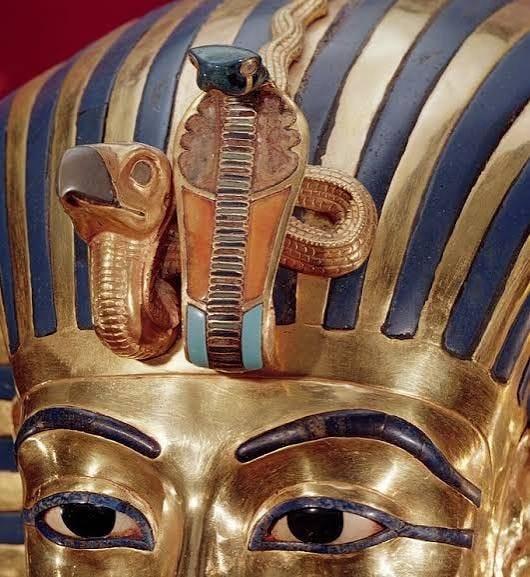
The point is that serpent-worship was a symbol of several powerful states and cultures, including Egypt and Mesopotamia. For centuries pharaohs bore the serpent symbol — specifically the cobra — on their golden headdresses. A positive attitude toward the serpent persisted even within the Israelite religious milieu: the Bible itself contains evidence that serpent-veneration existed among the Israelites. According to the narrative, the bronze serpent Nehushtan, made by Moses, later became an object of worship; King Hezekiah destroyed it because the people had begun to burn incense to it as a shrine.
Scholars suggest that the final redaction of the opening chapters of Genesis may have been directed against the popular religious ideas of the surrounding world. Anyone opening the first book of the Jewish Scriptures would immediately sense a bold, revolutionary challenge thrown at the rest of humanity. If in neighboring cultures the serpent was guardian of wisdom, giver of immortality, mediator between worlds, protector of the pharaoh, then Genesis performs a symbolic inversion: the serpent promises wisdom, exaltation, knowledge — but the outcome is exile, suffering, and death.
The serpent in Eden may well be part of that ancient polemic between monotheism and polytheism — not necessarily targeted only at the Egyptian cult of the cobra, but against the broader Near Eastern notion of the serpent as bearer of special wisdom and power. In Genesis the serpent does not urge people to commit an obvious evil. He offers knowledge, enlightenment, and likeness to the gods. That is why some scholars see this figure as far more complex than the later Christian understanding of “the Devil in the guise of a serpent.” For the ancient reader it could have been a debate about how humans obtain wisdom: through trust in God, or through autonomous mastery of secret knowledge.
The Book of Enoch played an important role in this process. It tells of a group of angels who rebelled against God and taught humans forbidden and secret knowledge. Note the parallel: the serpent gives people forbidden knowledge; the fallen angels give people forbidden knowledge. Over time these narratives began to merge. In the New Testament the link becomes almost explicit — especially in the Revelation of John: “the ancient serpent, who is called the Devil and Satan…” Here the author directly identifies the ancient serpent with the Devil and Satan. This passage had enormous influence on subsequent Christianity.
In the oldest books of the Old Testament, Satan is not presented as God’s adversary. For example, in the Book of Job the satan — literally “the accuser” or “the prosecutor” — enters God’s heavenly council and acts with God’s permission. In other words, originally “satan” was more an office or function than the name of an evil spirit.
Theologians and thinkers of the ancient world faced a difficult question: if God created the world good, where did evil come from? The later Jewish and Christian answer was: evil did not begin with humanity. First there was a rebellion in the spiritual realm; a fallen angel seduced humans; the serpent in Eden was only his visible manifestation. Thus the familiar picture emerged: Lucifer (from Isaiah) — the fall of the angels — the serpent in Eden — the Fall of Man. This is standard Christian theology.
No one can know for certain what exactly happened in Eden, how precisely the angels fell, or how these events were reflected in the Scriptures, for one reason: millennia have nearly erased the traces of those distant days. The author of these lines does not doubt Jesus’ words that He faced a powerful adversary in the spiritual world who had indeed fallen away from God: “He was a murderer from the beginning and did not stand in the truth, for there is no truth in him.” Jesus also spoke of rebellious spirits that harmed people. That is a fact. Yet Satan, though present in Jesus’ teaching, remains at the periphery. Jesus’ main attention is not the fight against the Devil. So is Satan the principal enemy of humanity in the authentic Gospel of Jesus Christ?
According to Jesus, the principal enemy of humanity is humanity itself. More precisely, almost all of Jesus’ sayings can be grouped into two main categories — two chief signs of human weakness that steal eternal life: “I don’t want” and “I’m afraid.”
Don’t want. Don’t want to be merciful. Don’t want to forgive. Don’t want to love enemies. Don’t want to bless those who hurt me. Don’t want to seek first the Kingdom of God. Don’t want to be honest with myself. Don’t want to remove the plank from my own eye. Don’t want to give up hypocrisy. Don’t want to serve others. Don’t want to be last. Don’t want to take up my cross. Don’t want to change my usual way of life. Don’t want to part with what I consider mine. Don’t want to become like a child. Don’t want to admit my mistakes. Don’t want to learn. Don’t want to grow.
Afraid. Afraid of tomorrow. Afraid of hunger and cold. Afraid of losing wealth. Afraid of losing status. Afraid of people’s judgment. Afraid of those in power. Afraid of being alone. Afraid of the unknown. Afraid of change. Afraid of losing control of life. Afraid to trust God. Afraid to take a step into the unknown. Afraid of looking ridiculous. Afraid of failure. Afraid of suffering. Afraid of death.
Seen from this angle, it becomes clear that Jesus speaks far more often about these two inner forces than about Satan, demons, or fallen angels. He constantly meets people who either do not want to follow the truth or are afraid to do so. Some know what is right but won’t do it. Others want to but are held back by fear. And some, alas, do not yet have eyes and ears to see and hear.
In this sense Satan in Jesus’ teaching appears less as the principal actor than as a voice that amplifies already existing human weaknesses — and even then, not always. He offers shortcuts where patience is required. He fans fear where trust is needed. He reinforces selfishness where love is demanded. But the decision is still the human’s to make. The final word always belongs to the person — whether “yes” or “no.” And the Devil can ultimately change nothing, whether he appears as a serpent, a porcelain doll, a human, or a spirit.
Therefore many of Jesus’ exhortations can be reduced to two opposite imperatives: First, learn to say “yes” to what love requires. The greatest human sin is the unwillingness to love. Second, stop saying “I’m afraid” where faith is required. Perhaps that is why one of Jesus’ most frequent phrases was “Do not be afraid,” and one of his most difficult commands was “Follow me.” The first addresses fear; the second addresses the unwillingness to change. It is between these two poles that most of the spiritual life of a person takes place. This was Jesus’ message when he walked the earth. And here they are: the two great ancient enemies of humankind that live within each of us. They must be overcome. We must rid ourselves of them.














 Follow Jesus Christ
Leave a comment